Category: Janus’ Journal

Join us as Janus celebrates the unique and niche elements that makes sport so spectacularly captivating.

  • The Greatest Ashes Moments: 2023 Ashes – The Day Lord’s turned Primal

    The Greatest Ashes Moments: 2023 Ashes – The Day Lord’s turned Primal

    Janus’ Journal #7 – By Hugh Wilkins

    The Ashes has regained some modern intensity through the 2023 Ashes series. A series fought between two drastically different styles; the methodical patience of the Australians versus the kamikaze “Bazball” style of the English. This Bazball style was displayed on the very first ball of this Ashes series at Edgbaston, as English opener Zak Crawley smacked Australian Captain Pat Cummins for 4.

    But this series created many iconic cricketing moments, and reignited the relevance of the phrase “spirit of cricket”, but we’ll get to that shortly. The Edgbaston test created an intense final run chase that echoed the cinema of the 2005 Edgbaston test and the importance of momentum in the patience of test cricket. England has an immensely rapid first innings, anchored by Joe Root’s 118, Captain Ben Stokes declared at 393 to have a pip at Australia at the end of Day 1. Australia responded with a resilient innings, spearheaded by Usman Khawaja’s uplifting 141 and aided by Travis Head (50), Alex Carey (66) and the lower order doggedness of Pat Cummins (38). Australia’s first innings fell 7 short of the English first, and the English’s reckless abandon led to their second innings total rising quickly, but lasting around a day, with consistent middle order contributions; Joe Root (46 off 55), Harry Brook (46 off 52) and Ben Stokes (43 off 66) all highlighted the virulent nature of Bazball. Australia’s second innings would not be as reliable as the first, as the steadfast Khawaja (65 off 197) was left largely on his own, as Stuart Broad tore through the middle order. After Alex Carey fell, Australia were 8-227, needing 54 runs to win as Nathan Lyon came in. But, what happened next would be ripped straight out of a comic book as Pat Cummins and Nathan Lyon were thrust into the middle. 54 runs to win, two batsmen, something that seemed improbable, and was so close to happening in 2005. But this time, with the Australian grit and occasional flair, Cummins and Lyon took control of the game. Cummins unafraid to play aggressively, replacing his mild-mannered demeanour with a Kryptonian heroism as he nailed deliveries from Broad and Robinson in the middle of his bat down the ground or through the covers for boundaries. Lyon showed immense heart, holding the strike and finding his eye with courageous pull shots on the swivel running fine, but his greatest shot was his punishing of Stuart Broad for four over mid-on. Like the 2005 test, Australia found themselves with 3 runs to win, with Cummins on strike. As Ollie Robinson steamed in, Cummins was able to reflexively ricochet the delivery onto the edge of his bat, as it sailed towards the boundary, and was knocked into it by a fielder as Australia ended up winning by 2 wickets, chasing 54 runs in a 9th wicket partnership, and avenging the Edgbaston demons from 2005. Watching this game early in the Australian morning had to be one of the most rewarding sporting results I’ve seen, and one that made me immensely proud of the Australian cricket team.
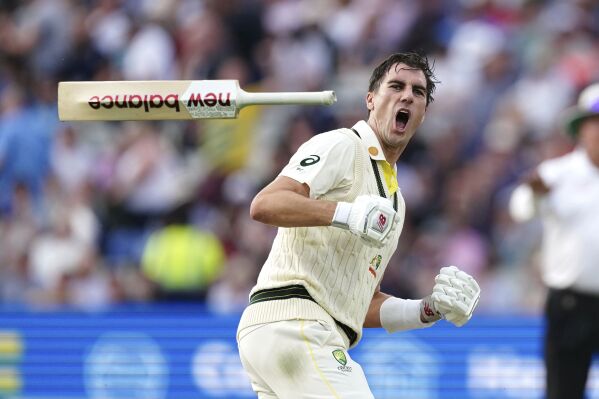
    Australian Captain Pat Cummins celebrating after hitting the winning 4 runs to give Australia a 1-0 lead in the 2023 Ashes series. Photo by Mike Egerton, June 20th, 2023

    But speaking of pride, this Ashes series, and particularly the second test at Lord’s, brought this element of pride to the cricketing forefront, as the notion of pride was brought into question. It even became a notion of political debate between Prime Ministers.

    Coming into Lord’s, both teams were fairly matched given the Edgbaston test being decided on the finest of margins. But at the home of cricket anything can happen. Australia probably entered with some extra confidence despite their away-team status given they had defeated India at Lord’s for the World Test Championship, so were somewhat battle-ready for the ground, but the atmosphere the English bring to Lord’s is different beast entirely.

    The match began with Australia being sent into bat amid the grey conditions that seemed to threaten the match, with England hoping to capitalise on the lowered visibility. It seemed a logical choice, but it did little to deter the opening partnership between Australia’s David Warner and Usman Khawaja. A contrasting partnership, as Warner’s aggressive shotmaking was enabled by Khawaja’s resolute defensive mindset to wear the ball and bowler down. Although Khawaja made just 17 runs, he faced 70 deliveries, which facilitated Warner’s balls-to-the-walls 66 off 88. This partnership was important dirty work that enabled Marnus Labuschagne (47) and Travis Head (77) to contribute through the dictating middle-order partnership with Steve Smith, who furthered his Ashes credentials with an almighty 110; whose innings was based on the vision of a jungle predator, remaining watchful for the exact moment to strike. Even the tail-ending Pat Cummins provided a handy 22 runs to give Australia a first innings score of 416.

    An immense score whose foundations rested on the first 20 overs, Australia was able to find a delicate combination between their trademark resoluteness and the flashy self-expression afforded at the crease. England would need to bat well to make inroads .

    And they did, with the 416 run lead getting whittled down as Day 2 continued on. The conditions cleared up, and openers Zak Crawley and Ben Duckett were able to capitalise on their destructive styles quickly off the mark. The outfield remained quick with the distinctive Lord’s slope, and Crawley and Duckett could flick, sweep and punch the Australian bowlers with ease. Crawley’s foot to the floor embracing of Bazball was evidenced by his 48 off 48 deliveries, and Ben Duckett made a delightful 98 in a heavy metal opening partnership that starkly contrasted the methodism of Australia’s opening partnership. Ollie Pope’s 42 and Harry Brook’s 50 were greatly contributing to England’s staunch devouring of Australia’s lead.
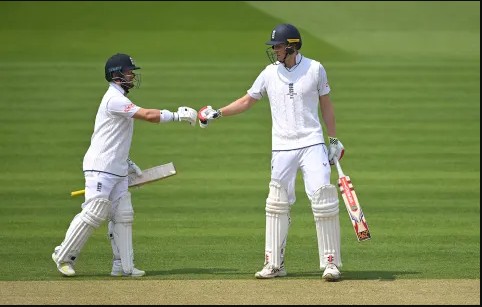
    Ben Duckett and Zak Crawley celebrate their fifty partnership in England’s first innings at Lord’s. Getty Images, June 29th, 2023.

    This was only worsened when Australia’s Nathan Lyon, playing in his 100th consecutive test match, popped his calf from an innocuous fielding incident.

    But Australia rallied, as Mitchell Starc’s dismissing of Joe Root (10), Harry Brook and Ben Stokes (17) inhibited England’s ability to override Australia’s total, with their rash approach inflicting rash wickets, and England found themselves 91 runs short of Australia.

    Despite a strong 77 from Khawaja, the Australian batsmen never gained a comfortable ascendancy in their second innings, clearly haunted by the cruelty of Nathan Lyon’s injury and wearing plenty through the English bouncer barrage as they embraced the Bodyline antics which was so successful in the English tour of Australia (1932/1933). What makes the Ashes special however, is the moments of heroism that these games afford. Despite exploding his calf, as Josh Hazlewood was dismissed, Lyon emerged from the Lord’s long room like a spectre, bravely batting through his injury. Although he couldn’t run, he gave Mitchell Starc the agency to swing freely, helping put a 15 run 10th wicket partnership, 4 runs of which came from an impressive pull shot on Stuart Broad. Lyon the lionheart had rejuvenated the Australian energy at the end of Day 3.

    This energy continued, as Mitchell Starc tore through Zak Crawley and Ollie Pope, and Pat Cummins got Joe Root and Harry Brook, leaving England 4-45 at the 13th over. Despite this, Ben Duckett and Ben Stokes were utterly destructive in their 5th wicket partnership, asserting an apocalyptic 132 runs. Duckett’s individually brisk 83 came at a reprieve, as a guiding punch off a Cam Green bouncer sailed to Mitchell Starc who caught the ball at deep fine leg. Although Duckett walked off, the third umpire brought him back to the wicket, ruling that Starc had grounded the ball in the process of catching which meant the catch was void. To the letter of the law, Duckett was not out, but in the moral spirit of the game, Starc had taken a fair catch amid overwhelming English momentum and had only gone to brace himself. As Marnus Labuschagne said: “[Starc] didn’t use the ground to catch the ball”. At the end of the day, the English were gallivanting around the Australians, using the laws of cricket to justify Duckett’s reprieve, who knew he was out.

    Mitchell Starc’s catch which he was ruled as not being in complete control of. Photo by Stu Forster of Getty Images, July 1st, 2023

    Ironically, this would not be the only question towards the morality/spirit of the rules in this game. On Day 5, England were chasing 258 to win, and Duckett’s exit brought in English Wicketkeeper Jonny Bairstow. With Bairstow’s tendency to attack the bowlers, the Australian tactic of bouncing Bairstow aimed to stem the flow of English runs and disable Bairstow’s fluidity in building into the innings; keeping the attack disjointed. Bairstow’s resoluteness saw him continually duck under the short balls and instantly exit his crease down the wicket to survey the state of the pitch. Almost as soon as he ducked, he exited his crease, while the ball was still in play. The Australian’s saw this, and Pat Cummins simply told Wicketkeeper Alex Carey to have a crack at the stumps on the next bouncer as soon as it came to him.

    Cameron Green delivered a bouncer to Bairstow which he ducked, and as soon as the ball half-volleyed to Carey, the wicketkeeper instantaneously unleashed the still-live ball onto the stumps. Unfortunately for Bairstow, he was already 5 feet out of his crease of protection before the umpire could call over, when the bails were hit. The Australians asked the question, and upon digital review, the third umpire had to abide by the same rules of the game that kept Duckett in: that Bairstow was out of his crease, and thus victim to a run out.

    As an Australian, I’ll never forget watching Day 5 with my dad at midnight when this moment happened. We had been questioning the Australian bowling at this point, particularly fearful of Stokes and his obvious desire to re-emulate his heroics at Headingley in 2019. As armchair experts through the delirium of a midnight spectating, we devised that Australia needed to do something different to get a breakthrough and hopefully mentally rattle the English. So when Bairstow got stumped, we were immediately in rapture. When the English media began questioning the tactic during the lunch break, we couldn’t help but laugh at the evident hypocrisy that arose by the same media that ruled that Duckett was rightfully given not out by the Mitchell Starc catch. England had been a beneficiary of a cricketing technicality, and it was only fair for Australia to get one back. 1-1. However, it was ironic that when the Starc catch was overruled, the Marylebone Cricket Committee took to twitter to explain the justification of the decision, explicitly citing Law 33.3 to adjudge Starc’s lack of control. But there was no such explanation post after the stumping to explain rule 30.11: “a batter is considered out of [their] crease unless some part of [their] person or bat is grounded behind the popping crease of that end”, or law 20.1.2: “the ball shall be considered to be dead when it is clear to the bowler’s end umpire that the fielding side and both batters at the wicket have ceased to regard it as in play”. Carey’s decision to throw the ball at the stumps instantaneously was an indication that the ball was still live to a Bairstow who had no part of his body or bat in his crease. This became a clear indication of an incensement at a decision which England had benefitted from and justified the day prior.
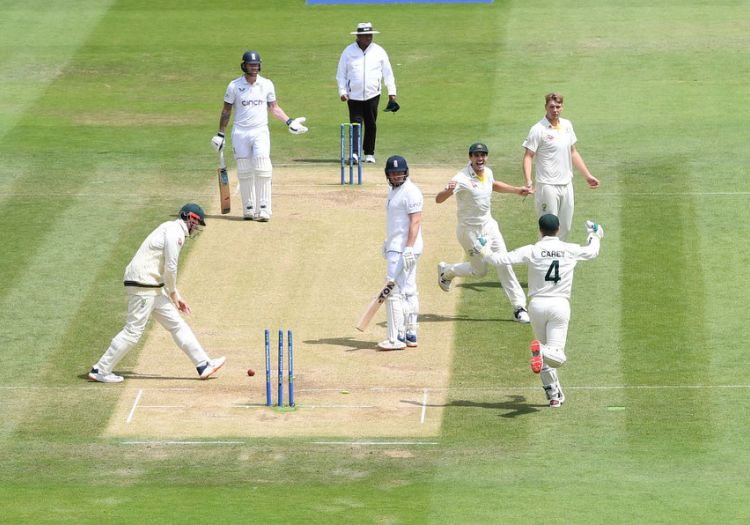
    Alex Carey and the Australian’s celebrate the stumping of a bewildered Jonny Bairstow. Photo by Gareth Copley, July 2nd, 2023

    Even when Stuart Broad came into the crease, clearly outraged by his perception of unsportsmanlike disrespect, and began to exaggeratedly put his bat in his crease and ask whether the ball is still live, my dad and I still noted the hypocrisy. Broad had notably been caught in the furore of another cricketing drama, as in 2013 at Trent Bridge, he had notoriously not walked after clearly nicking a delivery from Australian spinner Ashton Agar directly to first slip. He knew he had hit it, but stayed at the crease, staring down the umpire, who said not out. Broad himself defended his decision with no regrets, as because England won this game by 14 runs, “if [Broad] walked off, [England] would have lost the game”.

    So it became funny when Broad had interpreted an almost identical situation concerning the laws of cricket as completely juxtaposing. It’s fine when he does it, but when it is put back on him, he’s enraged. In sport, and in life, if you dish it out, you need to be able to take it back. Moreso, in Australia’s first batting innings, Bairstow himself tried a similar trick to dismiss Marnus Labuschagne, so any form of English outrage about what was coined to be “the spirit of cricket” from figures such as Piers Morgan, and even from English captain Ben Stokes and coach Brendan McCullum are completely neutered. I am certain, that if the shoe was on the other foot, this whole debacle surrounding the morality of cricket would not have occurred.

    Despite whatever opinion this incident encouraged, it was clear that Ben Stokes unlocked a venomous motivation to make the Australian’s pay. With a spinner down and on a flat wicket, the short deliveries Ben Stokes was peppered with were easily dispatched with vitriolic disdain to the boundaries (with one over resulting in 4 runs, 4 runs and 6 runs in consecutive balls). The plan to bowl short deliveries played directly into Stokes hand, and he was hell-bent on revenge.

    Ben Stokes flicking a delivery for a six, the fluidity of his shotmaking representing the enormity of his 155

    Although the English fell short despite the undeniable and powerful innings of Ben Stokes (155), losing by 43 runs, even with the tail wagging incredibly, the mentality of this new Bazball style was made clear. Whilst their reckless abandon brings about a kamikaze clarity in mindset, with zero fear of wicket, it shows that their gamble that surely one person will pull it off disables any form of sustained team partnership whilst batting, and brings in the opposition even when the game appears in England’s favour. Commentary surrounding this style, and one that I personally agree with, largely from cricket journalists like Adam Collins, is that there is a difference between carefree cricket and careless cricket. Even my personal viewing of cricket as a fan (not just an Australian), I do actually enjoy the spectacle of aggressive test cricket. But for any team to be successful, especially in test cricket, they must have gears. Games last for five days, and because momentum is so apparent within test cricket, teams must withstand pressure when its being inflicted, and counter-punching pressure back when the opportunity arises. Australia’s victory was not down to just the stumping, but it was built in the first innings total of 416, where they showed that their openers could absorb pressure, and allow the subsequent batsman to counterpunch the pressure back, working as a collective unit rather than relying on a bunch of cricketing mavericks.

    Ultimately, the 2023 Ashes series was drawn 2-2: as the Manchester test match was called off as a result of rain, with England winning the third test match at Leeds, and the fifth at Trent Bridge. However, I believe that this stumping incident gave England the motivation to finally turn up to the Ashes, and who knows what would have happened to the result had Manchester been played out. But at the end of the day, that’s all it was, potential.

    This Ashes series was one of the most dramatic in recent memory, and despite the tremendous display of punishing, intelligent and reckless cricket, it will only be remembered for the theatrical and dramatic return of the spirit of cricket, inflamed by Jonny Bairstow’s lazy saunter down the wicket on Day 5 at Lord’s.
  • The Greatest Ashes Moments: Edgbaston, 2005.

    The Greatest Ashes Moments: Edgbaston, 2005.

    Janus’ Journal #6- By Hugh Wilkins

    The Ashes. Australia. England. It is undoubtedly one of sports fiercest rivalries. A battle that creates furore, drama, anger, spite, but most important of all, entertainment.

    It arguably creates the greatest spectacle within the cricketing sphere. I understand that India and Pakistan fans will probably disagree with me, but those matches often descend into utter chaos, and become more than just a cricket match. The Ashes however showcases all the greatest elements of test cricket. Test cricket is the greatest format; five days, infinite possibility, and the Ashes always offers the opportunity to revive its prominence back into public consciousness.

    Regardless of form, nothing is predictable and anything can happen, which creates a canvas that spurs on any Australian and English cricketer to mythologise themselves into the annals of cricketing folklore.

    Join me over the summer of cricket, as in celebration of the upcoming 25/26 Ashes series, I will be covering some of the most iconic Ashes moments, beginning with the 2005 Edgbaston test match.

    Edgbaston, The Ashes (2005), Second Test Match:

    For any cricket fan, the 2005 Ashes series, fought in England, elicits the purity of test cricket. It had everything. Heroic performances with the bat and ball, dogged fight in the midst of batting collapses, and scintillating partnerships. Most of all, each game was an agonising display of grit, with incredibly tight finishes. This series highlights the momentum of sport, and the captivating battle that comes with a team trying to dig in and fight in the midst of relentless bombardment.

    Arguably the most iconic test match of this series was the second one, held at Edgbaston. Australia were 1-0 in the series after Glenn McGrath’s nine wicket haul and man of the match performance gave Michael Clarke the canvas to steer Australia to a 239 run victory at Lord’s.
    But McGrath was injured hours before the Edgbaston test in a pre-game warmup. All of a sudden, after a thumping defeat, the pendulum slowly ticked into England’s favour. Now, England did not need to face McGrath’s thunderous new ball deliveries, and the omen that the team that won the toss should bowl first was immediately inversed. Where McGrath had enforced an immense batting collapse in England’s first innings at Lords (with the first 16 overs resulting in a scoresheet of 5-21); English openers Marcus Trescothick and Andrew Strauss made a clear statement, using the rapid Edgbaston outfield to allow their powerful cover drives to sail away for boundaries (and punishing the incumbent new ball bowlers). Their power hitting created an incredibly different scorecard to the first test match, rapidly rising to a hundred partnership for no loss. After being punished around the ground, Australia brought on Warne to bowl in the 25th over. Even though Warne had been hit for six early by Strauss, his mastery of turning the ball sent a ball placed on the leg side careening into off-stump. Trescothick still sailed, but a tentative tickle at McGrath’s replacement Michael Kasprowicz was caught behind by wicketkeeper Adam Gilchrist, and after the soaring speed of the English openers, the time to strike for Australia was now.

    England’s Marcus Trescothick sweeping with aggression, which helped him make a first innings 90

    Australia took wickets in quick succession, dismissing a rash Michael Vaughan, which brought all-rounder Andrew (Freddie) Flintoff to the crease. Sensing blood, Australia’s Brett Lee directed Flintoff with vigorous bouncers, trying to inhibit Flintoff’s dangerously fast scoring as the sixth batsman, but Flintoff’s reactive and defensive pulling of Brett Lee for six was indicative of his stabilising half century. Combining with England’s Kevin Pietersen, the pair were able to hold the line, and dish it out in a controlling and intense manner. Flintoff finished the first innings with 68 off 62 balls, Pietersen with 71 off 76.

    After bowling England all out for 407; Australia sent openers Matthew Hayden and Justin Langer out in hopes that they could set the tone. Hayden, the flamboyant cowboy. Langer, the gritty warrior. Unfortunately for Australia, Hayden’s showmanship saw him come down the ground first ball to be dismissed for a golden duck. Ponting thus had to come in, and play with the flash which worked incredibly for England in their first batting innings, as well as to enable Langer’s dogged methodism to anchor the innings. The partnership between Ponting and Langer defined Australia’s first batting innings. Ponting dictated the speed of his game with his trademark pull-shots and cover driving at will, making a vital 62 off 76; accelerating Australia’s total to account for Hayden’s ephemeral departure. Langer meanwhile fought with his trademark boxers mentality; never flashy, always gritty, and his body-on-the-line mindset was pivotal to attempt to stabilise Australia. After Langer was trapped by the fast and full pace of English paceman Simon Jones, his departure for a determined 82 off 154 resulted in a lower order batting collapse and Australia were bowled out for 308.

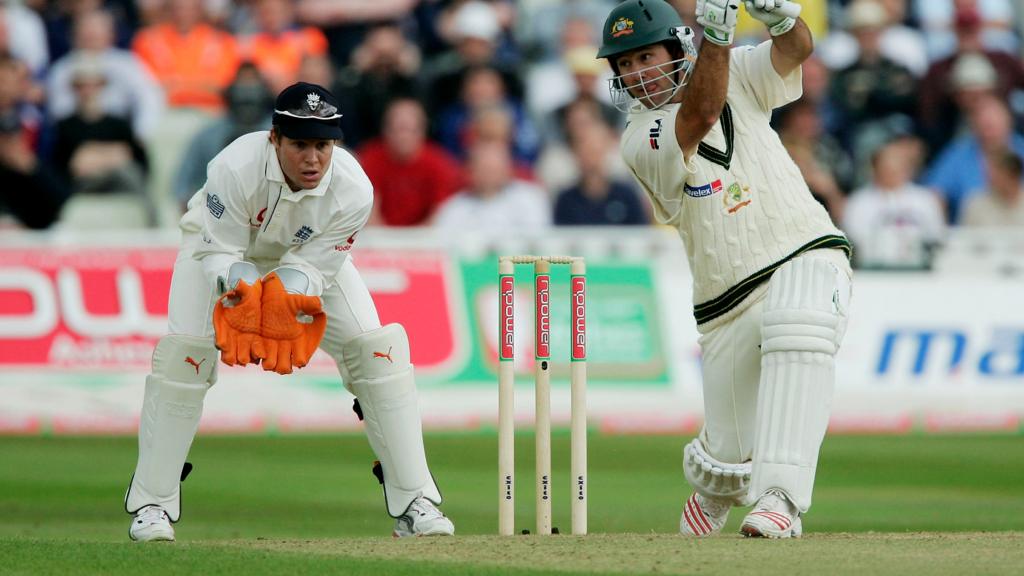
    Ricky Ponting driving a delivery as Australia sought to bounce back following opener Matthew Hayden’s golden duck dismissal on day 2.

    With a 99 run lead to begin their second innings; England had a favourable platform to push their total into difficult waters for Australia to chase. They just had to play with the lively freedom of the first innings. But that is not how sport works. Whilst it appeared that England’s Marcus Trescothick’s vitriolic dispatching of Brett Lee’s first delivery through extra cover for 4 runs would be indicative of the English mentality, England would instead face a bowling onslaught. The inimitable Shane Warne fooled Andrew Strauss yet again in the sixth over, and Marcus Trescothick tickled a wider delivery from Brett Lee straight to Australia’s wicketkeeper in Adam Gilchrist in the 11th over. Where Strauss and Trescothick had been an opening thorn in the Australian’s side, surging to a hundred partnership, they had suddenly been dismissed in quick succession for only 27 runs combined.

    Shane Warne and the Australian Cricket Team celebrating after the wicket of Andrew Strauss, who fell victim to Warne in both innings.

    English captain Michael Vaughan fell a similar victim, and was also dismissed in the 11th over, clean-bowled by the pace of Brett Lee. Where Lee had been dispatched in the early stages of England’s first innings, he was slowly and dangerously asserting himself in England’s second innings. This amounted to his dismissal of English nightwatchman Matthew Hoggard, as Lee instituted a mini-batting collapse at the end of the day’s play.

    What then followed was the Shane Warne show. Taking his good mate Kevin Pietersen again after clipping his pad for a tough Adam Gilchrist catch was quickly followed two overs later as Ian Bell was similarly caught by Gilchrist off a Warne delivery. Warne got revenge on fellow spinner Ashley Giles (who got him out in the first innings), and hit Steve Harmison with a full delivery flicked to Ponting in the slips.

    However, Freddie Flintoff remained, dictating the innings with ascendant scoring despite the growing casualties. Last man Simon Jones was able to keep Flintoff on strike and a licence to smash sixes around the ground. Warne ultimately got him, but Flintoff’s 73 off 86 meant England were all out for 182, rather than 131.

    Andrew “Freddie” Flintoff smashing a ball for six as he anchored England’s second innings total amidst a dangerous Australian bowling attack.

    Australia were chasing 282 to win. The opening partnership between Langer and Hayden started well in the first 10 overs. Langer working to pull quick bouncers on the back foot, and Hayden characteristically coming down the wicket for big cover drives. But just when it was looking like Australia had the momentum in their corner, England sent on their talismanic Prestonite, Freddie Flintoff. His wicked pace outfoxed Langer, rising through the gate and crashing onto his stumps in the second ball of 12th over. But that was not all for the 12th over, as what followed was an over of bowling deliveries of assassin-like intensity, as Flintoff sought to bully and lethally dispose of the new man at the crease, Ricky Ponting. Flintoff, relentlessly hunting, goaded Ponting into playing tempting shots before tightening him up in a bid to encourage him to play. He sought to bully Ponting, and he did, toying with his pride. Attempting to get off the mark and fight back at Flintoff, Ponting threw his bat at a ball that pitched up, but swung away, catching an outside edge going straight to English wicketkeeper Graham Jones, exiting for no runs after facing a venomous five ball spell that set the tone for England’s mid session dominance, as they sought to wrap up the second test match and to level the series at 1-1.

    Matthew Hayden, Damien Martyn and Simon Katich all departed quickly within five overs of each other. Adam Gilchrist, Australia’s wicketkeeper batsman who could pile on runs with reckless abandon, was out cheaply without as much as whimper within 4 balls. The English could taste the Australian blood after ripping through their batting lineup. The momentum, and the game, was now in the English’s hands.

    But, as is emblematic of this specific match, when the times got tough, it took grit and fight to get the game back on level terms. Playing for Australia elicits a historical pride, particularly through the reflection between sport and the ANZACs. Where the ANZACs, whose sacrifice, bravery and mateship developed Australia’s national identity; playing for Australia honours the sacrifice and furthers that national pride evoked by these qualities. Like the ANZACs, sometimes you just need to dig in, grit your teeth, and fight through the overwhelming punishment in a process of eternal endurance. That is exactly what defined the remaining 20 overs of this game, as Brett Lee and Shane Warne, the bowlers who had torn through England in their second innings, suddenly found themselves holding the line in the trenches of that Edgbaston wicket; amidst the torrent of baneful deliveries to fight for their lives. Lee and Warne had both been a part of the Australian team that travelled to Gallipoli before the 2001 Ashes series, led by captain Steve Waugh, who sought to elicit a profound appreciation for the ANZAC sacrifice, and an understanding of what it means to represent your country. They channelled this profundity into their unyielding mentality, and although the English threw the kitchen sink at the two, still they remained, determined. Wearing the punishment of the cricket ball with the courage and grit becoming of the ANZACs.

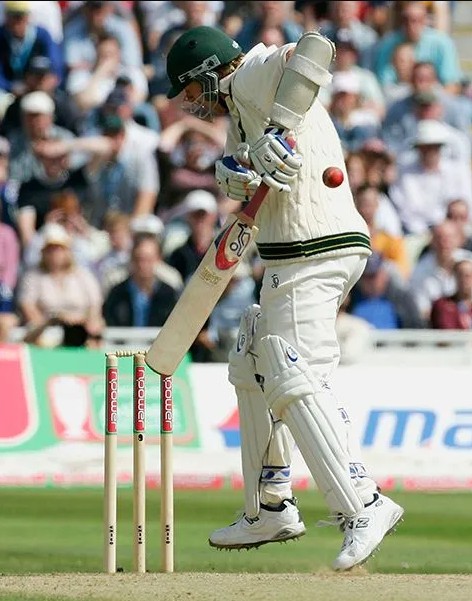
    Brett Lee absorbing the cricket ball with his body with the grit that defined his batting innings and reflected his ANZAC mentality.

    Fortunes seemed to shift in the English favour when the lionhearted Warne was pushed backwards by a Flintoff delivery which caused him to trollop on his own stumps. But, last man and last minute replacement, Michael Kaspowicz was tenacious with Brett Lee to maintain the Australian fight, playing big shots to further pressurise the English attack. It seemed to work, with their gumption keeping momentum in Australia’s hands: A Kaspowicz shot to third man is almost caught by Simon Jones. An inside edge from Brett Lee is inches away from the stumps and beats the keeper for 4 runs. A Flintoff no ball is flicked on for 4 by Lee. The fortitude of Lee and Kaspowicz lead to Australia only needing 4 runs to win. Lee was able to strike the ball through cover and it appeared to sail to the boundary, but was fielded for a single, placing Kaspowicz on strike, and Australia needing 3 runs to win. Ultimately, Kaspowicz was caught by surprise by the Harmison delivery, suddenly rising on him in defence as Geraint Jones took an impressive diving catch to give England a 2 run victory over Australia. A dramatic finish to an all-time classic test match.

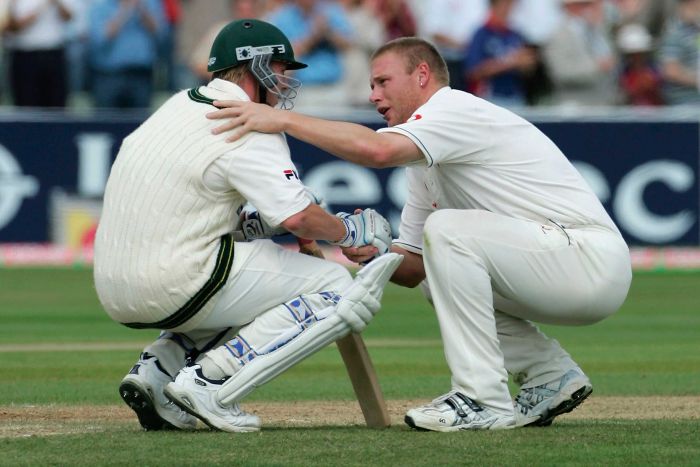
    In what was an epic test match, one of immense courage, fight and class, it will always be indemnified by one image. That of Freddie Flintoff; who was awarded man of the match for his contributions with bat (68 & 72) and ball (3 & 4), humble in victory by consoling the valiant Brett Lee in a sign of incredible sportsmanship that truly highlights this game in the annals of the spirit of cricket.

    A heroic Brett Lee consoled in defeat by the humble Andrew Flintoff, who was awarded Man of the Match.

  • Anthems and Identity

    Anthems and Identity

    Janus’ Journal #5- By Hugh Wilkins

    Music is a deeply spiritual and elucidating part of life. It can be deeply emotive, beautifully raw means of support, clarity or identity for oneself. However, music and sport have a close bond. Where supporting a sports team creates an interminable bond between fan and club, this connection can be only strengthened by music, with it coming to define the identity of both the club, and its supporters. Whether belted out before, during or after a game, these anthems are integral at emotionally reifying the club to its supporters: creating not a business, but a family.

    West Ham: I’m Forever Blowing Bubbles

    I’m Forever Blowing Bubbles was a song that was created for the 1918 Broadway musical, The Passing Show of 1918, and it wears its meaning blatantly. It speaks to the ephemera of dreams, and how, despite their fleeting nature, come to define a clubs identity.

    West Ham as a club are often constrained by their own ambition. As they try to reach for the sky through flashy football, homegrown talent, and working class grit, the realism of life in English Football supplants ambition with reality. But still, the songs message highlights that when nothing is given, you need to work hard to achieve your ambitions.

    As the lyrics suggest, “fortunes always hiding”, but regardless, the Hammers blow bubbles that always try to “reach the sky” despite how their dreams “fade and die”. No matter what happens, no matter how many times the dream fades, the ambition never does, as West Ham continue to blow their bubbles.

    An anthem that shows a desire for more. It reflects West Ham’s never say die attitude. The song is sung with passion before kick-off at every home game, bubbles are released in the stadium on every West Ham goal, and West Ham’s 2023/2024 home shirt even had bubbles emblazoned on it to reinforce the songs connection to the clubs identity.

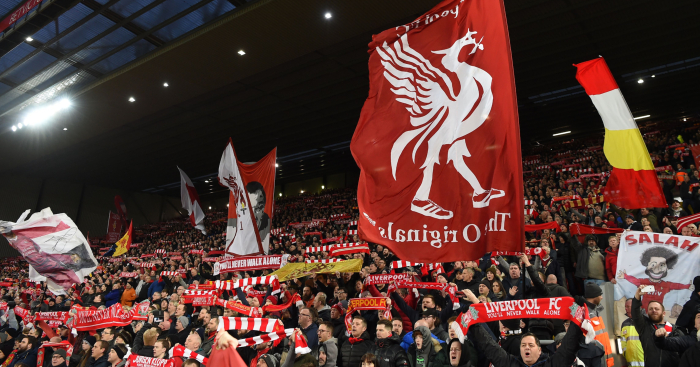
    Liverpool: You’ll Never Walk Alone

    The anthem that has become a motto for Liverpool, it forever represents the community support that is expressed by Liverpool and its fans to their club, their city, and the wider football community.

    Created by Gerry and the Peacemakers in 1963 in celebration of a passing friend, it made its way to Liverpool after manager Bill Shankly was awed by it upon listening to the single in 1965. This translated to its consideration as Liverpool’s club song, which was proudly sung for the first time in the 1965 FA Cup final between Liverpool and Leeds United.

    It’s hopeful message ensures it is sung in times of hardship. Its symbolism of unity and community strength has found further meaning in the midst of many footballing tragedies. In the wake of the Hillsborough disaster (1989); a disastrous crowd-crush, Anfield residents sang this anthem as a poignant reinforcement for communities recognition of the victims (97 of which were Liverpool fans), and unwavering support for their families. The song became a hopeful anthem that these families would never walk alone again.

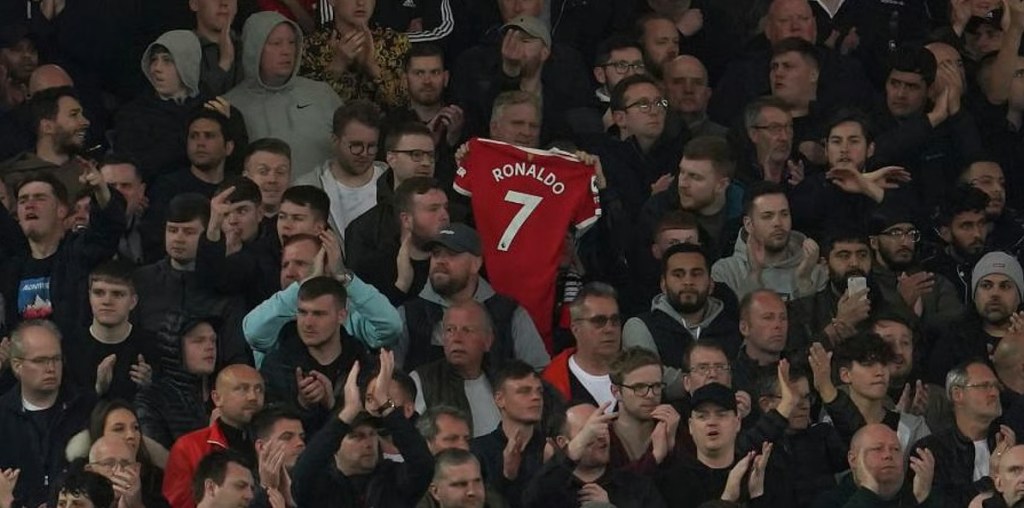
    More recently, in 2022, when Cristiano Ronaldo and his partner Georgina’s newborn son tragically passed away, the Anfield crowd used the anthem as a touching tribute for a footballing icon. In the seventh minute of a match between Liverpool and Manchester United, the Anfield crowd rose in applause for the Ronaldo family, and sang You Will Never Walk Alone. That is what the anthem is, it looks at football past the rivalries, and instead highlights the beauty of its unifying nature. The anthem became a vessel that showed that the entire footballing world, regardless of club or country, that in the wake of unimaginable tragedy, the only way to get through it, is together.

    Most recently, in the wake of Diogo Jota’s passing: the song re-emerged as an undying connector between the supporters, the players and the club, all of which were absolutely rocked by the sudden death. In the pre-season matches, the minute of silence was followed by the raw chorus of the anthem, sung with immense vibrance. Moreover, Liverpool’s beautiful gesture to continue providing Jota’s family with the remainder of his contract shows that those apart of Liverpool, no matter for how long, or how short, will never walk alone.

    The Anfield crowd singing You’ll Never Walk Alone in tribute to the Ronaldo Family in 2022

    Sunderland: Can’t Help Fallin’ In Love With You

    The meaning of the song is obviously evident. Sunderland, a proud, passionate and spirited city that is reflected in its supporters, and despite Sunderland’s recent footballing turbulence, these supporters are undying in their loyalty.

    Elvis’ Blue Hawaii hit made its way to Sunderland in the 1990s, a period where Sunderland bounced around the football leagues with relegations, promotions, survival and mid-table finishes. In 1992, in which they were relegated, they still made a miracle run to Wembley in the 1992 FA Cup, which they lost 2-0 to Liverpool.

    Sunderland fans are among the most passionate in English football, and they started singing Elvis’ anthem as a message to the club. No matter what happens, the fans will be there, rain, hail or shine. It is an anthem of undying devotion, personal commitment, the resilience of love, but most importantly, pride. Sunderland supporters are intimately proud of their team, and belt this anthem out at the beginning of every home game to solidify the cosmic connection between players and the fans.

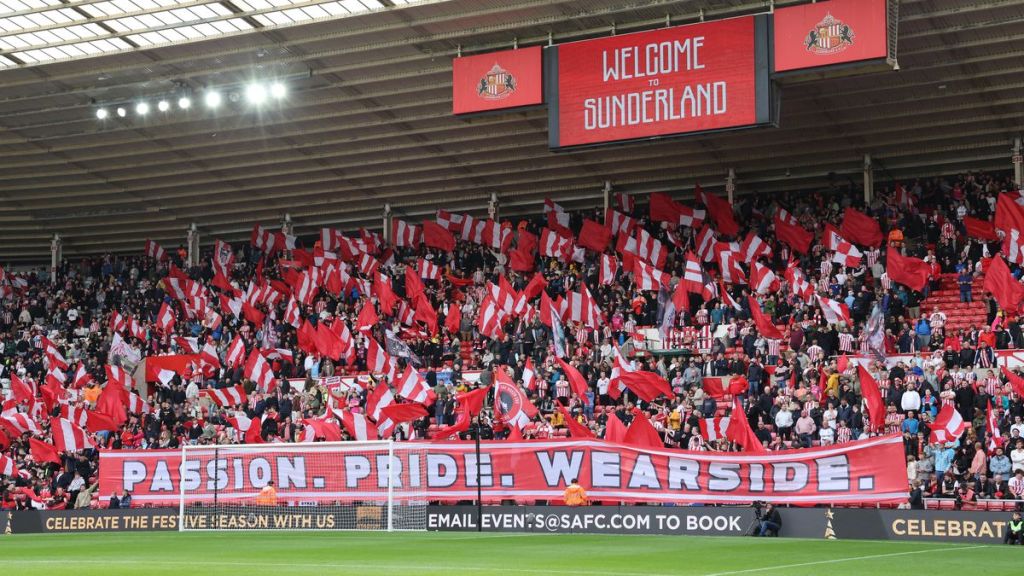
    Sunderland’s home, Stadium of Light, is an emotionally resonant environment. The name itself evoking the Sunderland miners emergence from the depths of the mines. The song if further indicative of this, as no matter how dark it gets, how tough it is, the love of the fans is forever: and will always be a light in the darkness for Sunderland.

    In my following of Premier League, I have never seen Sunderland play due to their inhabiting of the lower leagues. My first experience witnessing the Stadium of Light came most recently on the opening fixture, which ended as Sunderland beat my West Ham 3-0. The limbs on each goal, and the deafening atmosphere that bled through the coverage only heightens just how loyal and devoted Sunderland fans are.

    Sunderland’s Stadium of Light is one of the most intimidating and passionate in all of English Football

    Port Adelaide: INXS Never Tear us Apart

    Anthems are not just limited to the world game. In AFL, few clubs have adopted it, but the ones that do have generated a primal connection to the club that is a sight to behold.

    The Port Adelaide Magpies were a proud South Australian National Football League (SANFL) club, with a rich history and passionate supporters, established in 1870. In 1997, when Port Adelaide were granted the licence in the AFL, the club itself was brutally divided. The Port Adelaide Power became the AFL team, and was not allowed to be associated with the magpies of the SANFL. Legal tribulations ensured that the Port Adelaide of the AFL was considered a pale imitation by the fans who felt that the real Port Adelaide was the one in the SANFL.

    The club was brutalised, and their history, neglected. For the diehard supporters of Port Adelaide, this was a bitter pill to swallow. The Port Adelaide Power was associated with Port in name only.

    The use of the anthem dates back to 2012, after a club trip to Anfield saw them witness Anfield’s display of You’ll Never Walk Alone. Matthew Richardson (Port’s General Manager of Marketing) saw the commercial value of such an event, and the ability to generate further connection between the supporters and the club. Enter, INXS’ 1988 hit: Never Tear Us Apart.

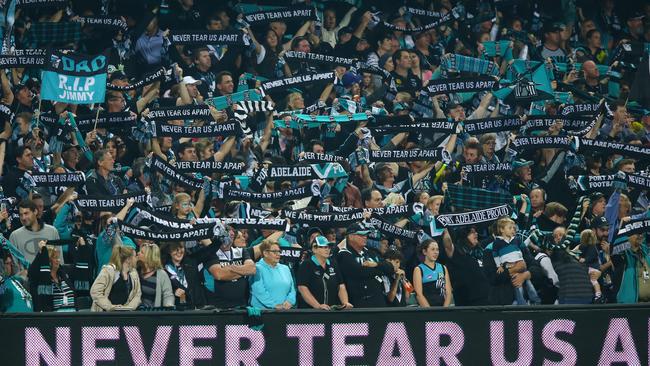
    The meaning is clear. Port, which endured much turmoil in the merger from the SANFL and the AFL, resulting in a brutal disconnection from their rich history, used the anthem as a beacon of the strength and undying tenacity of their supporters. Despite the AFL’s attempts, Port Adelaide survived, and the anthem is a beacon of their impassioned stance towards the preservation and celebration of their history. The Port fans turn Adelaide Oval into an intimidating and territorial hunting ground that strikes fear into any opposition supporter or player.

    Port Adelaide fans proudly adorning their scarves during a home rendition of INXS’ Never Tear Us Apart
  • When Football Mirrors Life

    When Football Mirrors Life

    Janus Journal #4 – By Hugh Wilkins

    Recently I read Nick Hornby’s 1992 memoir as an Arsenal supporter “Fever Pitch”. Hornby’s passion for Arsenal often bled into his own life, marking personal events and moments with Arsenal.

    This is both the pride and peril of sports supporting. Sports find us. It can come to us in our darkest days, or our brightest moments, and they help us to develop an understanding of who we are.

    What follows is my personal journey following West Ham through the 2024/2025 Premier League season: a season integral to my own development, mirroring my struggles in navigating immense personal change.

    West Ham 24/25: A Season of Collapse and Personal Growth

    The Collapse of Hope:

    Before 2024, West Ham enjoyed what was probably their longest period of sustained success under David Moyes. The Hammers secured three consecutive years of European football, their highest ever Premier League finish in 2020/21 (at 6th), and secured the 2023 Europa Conference League title. Midway through the 2023/24 season, West Ham were 5th in the Premier League.

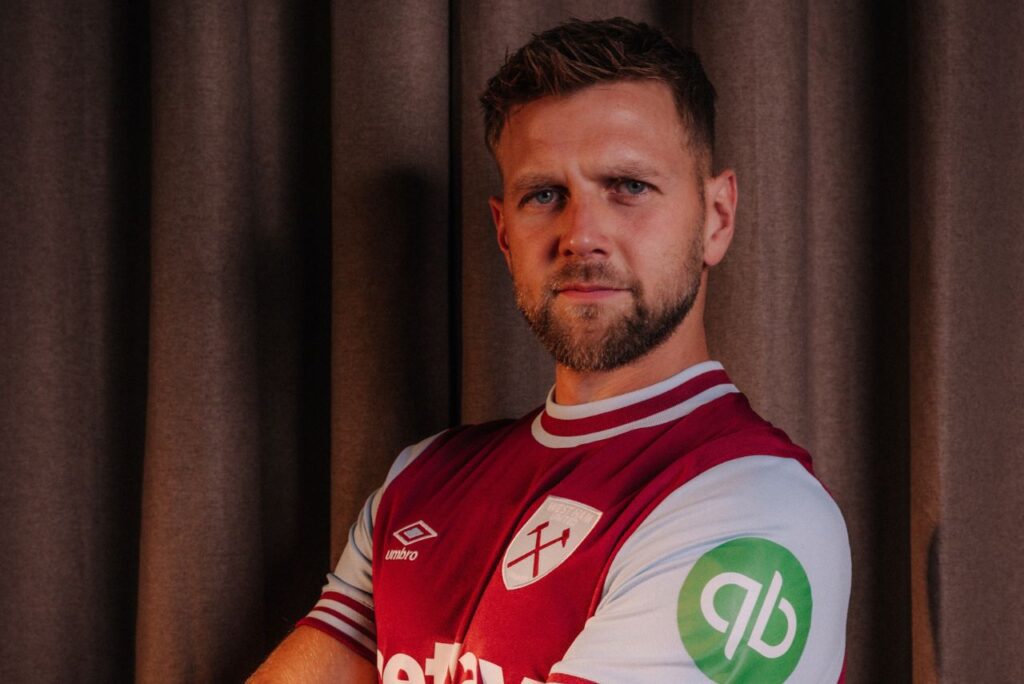
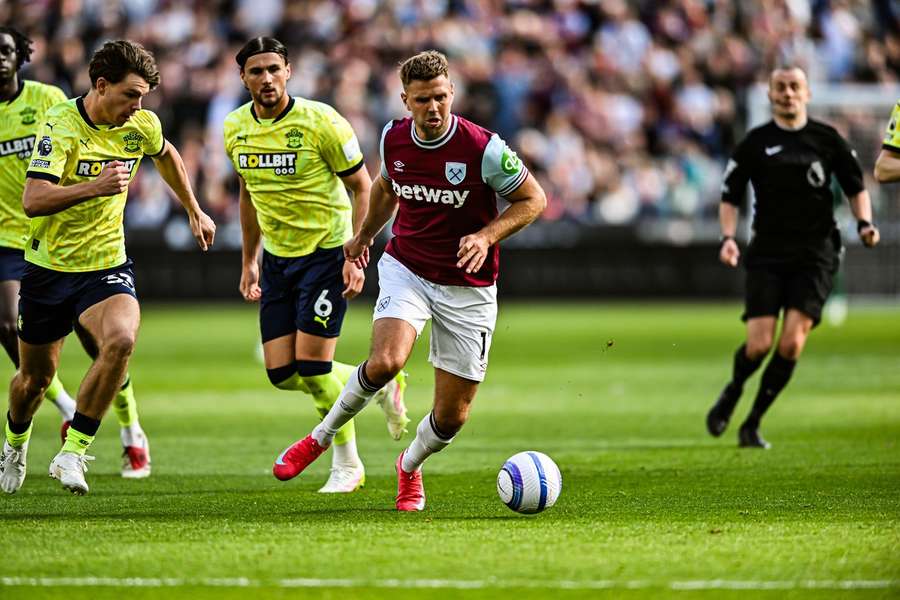
    Then 2024 came around, and West Ham’s form plummeted, conceding 79 goals, getting eliminated from the Europa League, and manager David Moyes leaving the club. A busy summer period with incoming manager, Julen Lopetegui, looked to rectify this poor form, bringing in the Championship player of the season, Crysencio Summerville, Borussia Dortmund striker and German international Niclas Fullkrug and Argentinian 2022 World Cup winner, Guido Rodriguez.

    German striker Niclas Fullkrug in his first promotional photoshoot as a West Ham Player

    That’s the thing with supporting, there is a mirrored reflection between a supporter and their club. Similarly, my 2024 looked optimistic. I was going into the third year of my Bachelor’s degree, moved into a share-house for the first time, and was excited at the prospect of positive adult development surrounded by my mates all going through a similar experience. Little did I know that 2024, like it was for my beloved Hammers, would end up as the toughest year I have ever endured. Everything changed, and I had to re-learn who I am all on my own.

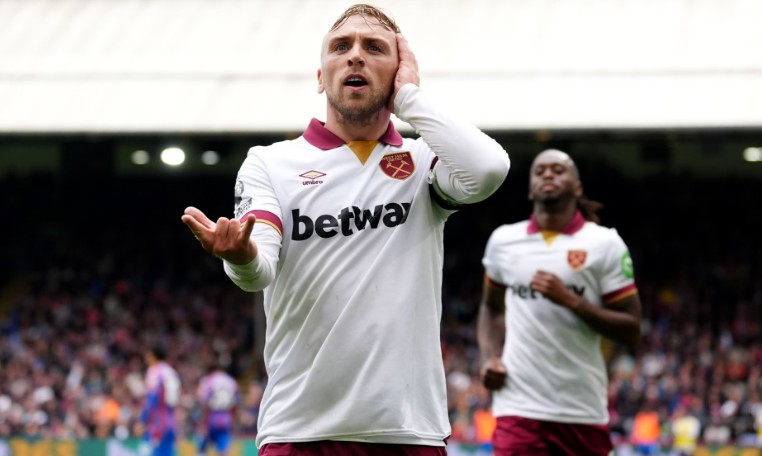
    West Ham’s second game was an away fixture at Crystal Palace, looking to bounce back after a disappointing home defeat 1-2 to Aston Villa. In Australia, this fixture was at 2am, which I stayed awake to watch. After a dour, first half performance- the substitution of newly acquired right-back Aaron Wan-Bissaka after half-time injected major vigour into the team. This spurred a sensational five minute burst. A driving run from Wan-Bissaka created a chaos ball in the box, which was punished by Tomas Soucek for 1-0 to West Ham in the 67′, and a Max Kilman surge from full-back to midfield, breaking a tackle and switching wide to the vivacious forward run of Jarrod Bowen in the 72′ brought about the winning goal. Full-time brought satisfaction and optimism about the season ahead. Our new signings were all involved in a terrific team win. Little did I know, the stability I had felt in my life was going to change, and that hopeful optimism was going to be replaced with a depressing realism.

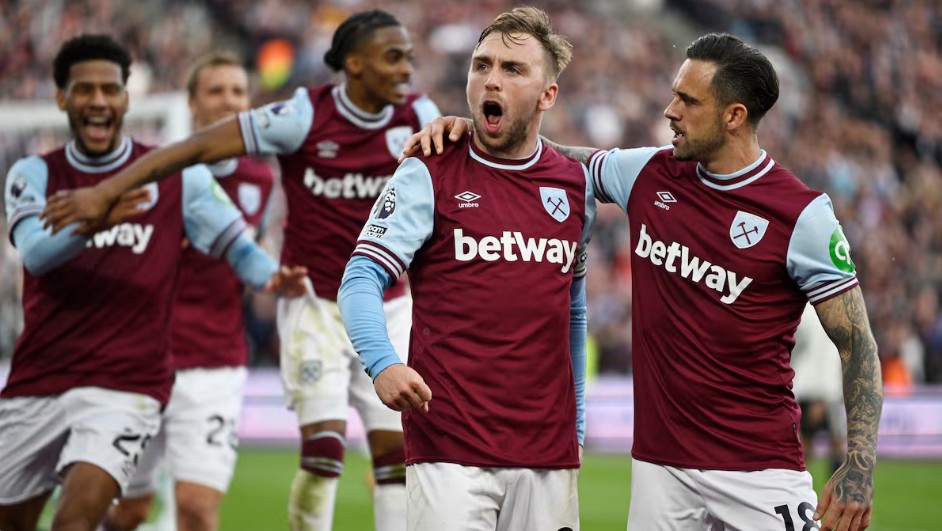
    Jarrod Bowen celebrating his winning goal away at Selhurst Park with the travelling West Ham supporters.

    The morning after our victory over Crystal Palace, I woke up to an ominous text from my long-time girlfriend: “we need to talk”. This brought about the immensely difficult conversation to part ways, although the decision was ultimately the right one for both parties. It was not working, and it was a healthy and amicable decision.

    What followed was a turbulent season that reflected my own newfound struggles. The previous seasons concerns around conceding continued, getting dominated by the top teams while barely firing a shot. Erling Haaland of Man City got his second hattrick in consecutive games, facilitating a 1-3 loss. Chelsea handed us a 0-3 home defeat; complete with a Nicholas Jackson brace, although his Michael Jackson Thriller celebration was the most uproarious moment of that day. Tottenham taught us a lesson in a 4-1 loss. A dominant West Ham first half broke down in the second half, with Tottenham scoring three times in eight minutes. The night was summed up by Mohammed Kudus’ (now a Tottenham player) fiery fight with Spur’ Mickey Van de Ven, finding himself suspended for 5 matches for headbutting.

    Former West Ham player Mohummad Kudus losing his head against his now Tottenham team-mate Mickey Van de Ven

    Sprinkled between these losses were 1-1 draws away to Brentford and Fulham. In the former, Brentford scored in the first minute through Bryan Mbeumo, and West Ham equalised after half time through Tomas Soucek. The latter was a game that was all but destined for a loss, down 1-0 deep into stoppage time, but a chaos ball snuck into the Fulham net by way of substitute Danny Ings, able to salvage a point with nigh on the last kick of the game.

    I mention the early months of the season by way of its personal relevance. I found myself struggling to understand who I was and my personal direction. I’d have days were I felt crushed by a torrent that just had no mercy, and my directionlessness was mirrored by West Ham’s performances against City, Chelsea and Tottenham. But there would be other times where I was able to fight through some demons and find little wins, just as West Ham dug in against Brentford and Fulham, able to salvage themselves after going 1-0 down early in games.

    Loss and Resilience:

    December came around, and brought with it, an immense shift into the already shaken stability of the club. Michail Antonio, a nine-year long servant and West Ham’s all-time goal scorer, was involved in a catastrophic car accident that he was eternally lucky to have survived. All of a sudden, West Ham had to adapt to a team without Antonio. His absence really felt in the immediate game after the accident, a home fixture against the equally struggling Wolverhampton Wanderers. A scrappy game which we ultimately won 2-1 through Jarrod Bowen, but Bowen’s celebration where he lifted aloft Antonio’s number 9 shirt really accentuated his absence. The five months going into December was particularly tough. The inherent reflectivity of Christmas meant I looked back on the changes from the year previous, and I couldn’t help notice how much more unsettled I was. I really felt her absence, just as West Ham felt Antonio’s. I watched this game at my family home as I sought comfort in a lonely holiday period, and it felt that the win was dedicated to me personally. Jarrod Bowen may as well have been holding a shirt with my name aloft and saying “no matter how tough it gets, you will fight through this”. To be fair, this four game December period was West Ham’s best statistical output, having a four match unbeaten run: a 2-1 win v Wolves, 1-1 draws against Bournemouth away and Brighton at home, and a boxing day 0-1 victory against Southampton away.

    Jarrod Bowen honouring his teammate and friend Michail Antonio, celebrating his winner against Wolves by raising Antonio’s shirt and number

    January came around, and instantly denigrated that fairly dogged four game stretch through December. Instead, our last match of 2024 was a 0-5 home demolition at the hands of Liverpool which was only worsened by Liverpool’s Alexis McAllister’s unnecessary tackle on Jarrod Bowen, fracturing his foot and leaving the captain out for six weeks. During the December period I felt I had begun the process of genuine recovery. I had to fight to find pockets of positivity amongst constant gloom, as the Hammers did through their four-match unbeaten streak, but this demolition brought about a reality check that recovery certainly wasn’t going to be easy. I simply would need to be adaptable.

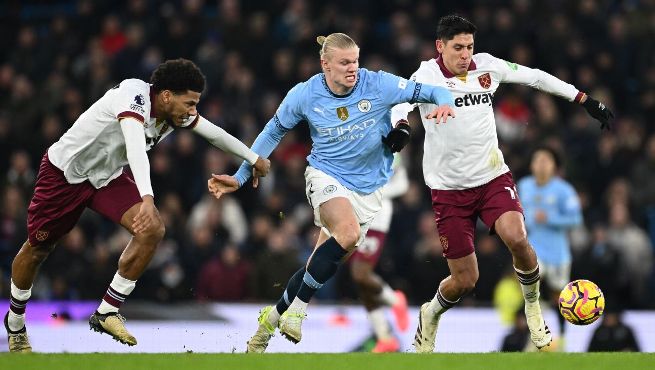
    The Hammers first match of 2025 was not any easier. Manchester City, experiencing their worst run of form under Pep Guardiola, still embarrassed us in a 4-1 loss. This match was the final straw for Spanish Manager Julen Lopetegui, and all of a sudden, despite the early season optimism, the team had to endure more sudden change. No striker, no captain, and now, no manager. The day of this Man City loss, I had met up, for the first time since August, with my ex for a catch up coffee. A valuable experience that brought much needed closure, and readied me to move forward. I suppose the loss came at a time where I was ready to genuinely come to terms with the reclamation of my individuality. I had no striker, captain or manager to help guide me through it, but a team whose performances were starting to reflect my own journey for emotional recovery. We both had to start figuring out who we were.

    Erling Haaland (middle) in a physical contest with Jean-Clair Todibo (left) and Edson Alvarez (right)

    A New Identity:

    Following Lopetegui’s firing, West Ham appointed former Brighton and Chelsea boss Graham Potter as manager. A possession, tactical and long-term project style manager, he was appointed two days before a third round FA Cup tie away against Aston Villa. Potter came in to rectify our tendency to leak goals. Beforehand, a West Ham game was over as soon as a goal was scored against them. The team appeared directionless under Lopetegui, as it looked as if there was a limited game plan and identity. Potter had to work on the fly to rebuild the West Ham identity, and fittingly came about at the same time I had decided to actively work towards recovery and self-respect in the new year.

    I woke up for this FA Cup fixture on family holiday in Warrnambool, watching from the beach at dawn, and I couldn’t have asked for a better start. Dominating from kick-off, maintaining possession and looking dangerous. Summerville was involved early, using his pace to beat his man on the wing and whip in balls centrally, which proved to be the assist to find Pacqueta who scored from the box in the 9′ minute. But, the frigid Birmingham night proved costly. With a goal advantage, striker Niclas Fullkrug chased a loose ball in space, which proved too straining, as he tore his hamstring clean off the bone. This was then followed by a hamstring tear to Summerville just before half-time, who had started the game so well and looked unbelievably threatening. Ultimately, we ran out of petrol in this game, and Villa were able to score two goals in quick succession, Amadou Onana equalised from a corner, taking the wind from our sails, and Morgan Rogers’ winner only minutes later proving too big a deficit. Although we lost, there was a tactical vision I hadn’t seen for while.

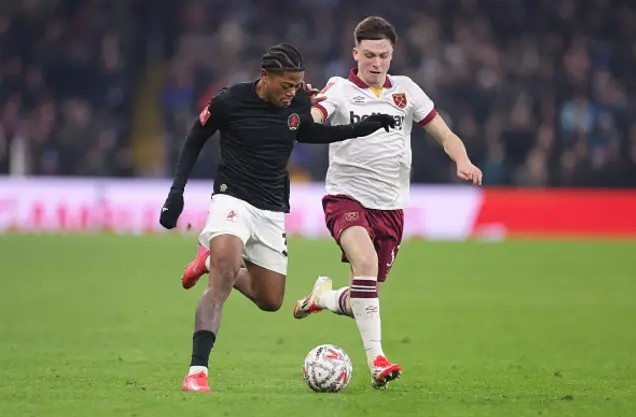
    Potter’s managerial stint began with a statement. West Ham’s high average age (at 28) had been a common criticism, which made Potter’s debuting of young, academy left-back Ollie Scarles all the more impactful, and the kid’s resilient and reliable composure saw him duly rewarded as player of the match. What hurt most out of the game however, was Niclas Fullkrug’s injury.

    West Ham’s Ollie Scarles in pursuit of Aston Villa’s Leon Bailey in the FA Cup 3rd Round fixture.

    We had gotten Fullkrug in our expensive summer spree. A traditional, hard-nosed striker who came across from Germany to England to prove himself. I was inspired by his clear drive, motivation for success and inherent leadership qualities. You could tell he was ready to be that starting striker following Antonio’s absence, but it felt like Fullkrug’s first year in London was a clear reflection of my own 2024/25 season. We both had an immense drive to flourish and develop self-pride in the midst of immense personal change. Fullkrug moved away from his home country for a new opportunity, just as I had experienced an immense change in rediscovering my own identity post breakup. But, despite our drive, we were both trapped in our respective bodies and enslaved to circumstance. West Ham had lost its captain and another commanding leader at a time where I felt I needed guidance, although I knew I would need to manage it myself.

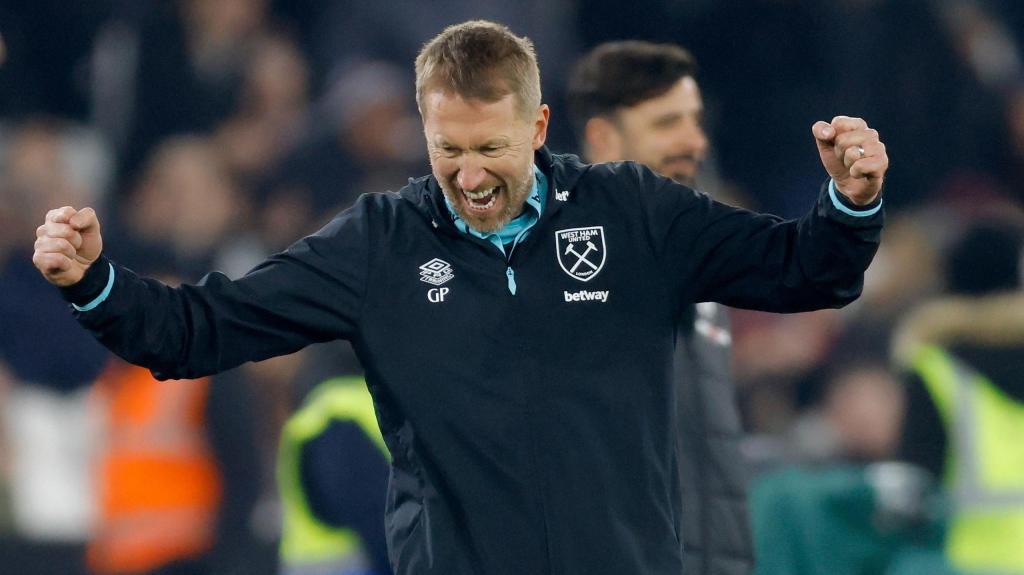
    Potter had a free hit with the last six months of the season. Relegation, whilst a (very slim) logistical possibility, given how diabolical Southampton, Leicester and Ipswich were meant that West Ham would have had to completely choke every game they played to go lower than 16th. Moreover, the season went undetected in the midst of Manchester United and Tottenham’s horrific league campaigns. Potter had to manage the residual squad inherited from Lopetegui’s spending, and had to build a connection with the team that could set him up for a full pre-season. Although statistically, his output was worse than Lopetegui’s, there was a clear shift in mentality, and the Hammers were able to stay in games longer. Where Lopetegui’s approach was a blitzkrieg style that was defensively neglectful, Potter’s methodical approach required players to become far more autonomous in their decision making.

    Manager Graham Potter celebrating a West Ham 3-2 home victory against Fulham

    Gradually, an identity appeared. We put ourselves in many winnable positions in games during 2025, but lacked that killer instinct. However, our best win of the season did come in this time. An away fixture at the Emirates against an Arsenal looking to put some table pressure back on the leaders Liverpool. Enter, West Ham. Defending deep, a counter-punch from the right hand side through right-back Aaron Wan-Bissaka was squared to Jarrod Bowen, running hard to beat former West Ham Captain Declan Rice, to dive for the winner header just before half-time.

    This was an absolutely terrific win. Going in as underdogs, and garbed in an all black stealth kit, West Ham silently entered the Emirates, and assassinated Arsenal’s title hopes for the second year in a row.

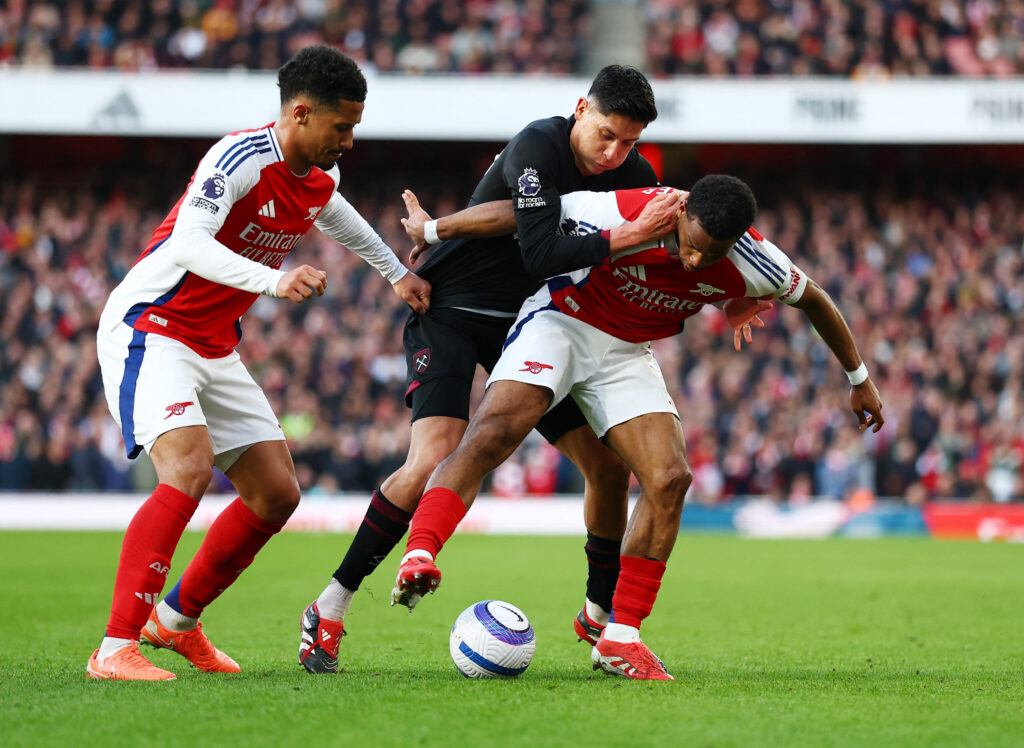
    West Ham’s Edson Alvarez (middle) in a contest for the ball with Arsenal’s William Saliba (left) and Gabriel Jesus (right) as West Ham fought for a 1-0 win.

    A Gradual Rebirth:

    There was a clear culture shift from this win. Rather than roll over and die, West Ham dug in. Although everyone wrote them off, they proved everyone wrong. This game was in late February, and routine was reasserting itself. I became nervous about starting my Masters degree, but this game proved I should avoid concerning myself with what others think. Instead, the strongest thing I could do was dig in, and prove to myself that I can do whatever I set my mind to.

    Although there were flashes, which peaked with the Arsenal game, West Ham continued to drop points in stoppage time. Away at Everton against former West Ham manager David Moyes, Tomas Soucek’s second half goal was countered by Jake O’Brien’s 91′ minute equaliser. Worse still, was a 1-1 home draw to the bottom dwelling Southampton. West Ham took a commanding position, but wilted at the end of the game, which allowed Ugochukwu to equalise for Southampton in the 91′ minute. Although this result shambolically summarised the season, it was Niclas Fullkrug’s scathing post-match comments criticising the mentality of certain players (his direct words were “we were shit”), that will immortalise this game. I hated the result, but I loved Fullkrug’s comments. Both the team, and myself, sorely needed that style of leadership after feeling increasingly isolated. I felt that I finally had an inspirational leader that knew the resilience that laid dormant in me, and would not tolerate me taking the easy way out in recovery. Fullkrug spurred me to reclaim that resilience with 100% commitment and channel it in my new life, no matter how tough the circumstance. All of a sudden, I realised couldn’t take any half-measures in rediscovering myself.

    Niclas Fullkrug (middle) involved in a forward play against Southampton, which ended 1-1.

    It was clear how tired the players were by seasons end. Despite their valiance, the turmoil that both the club, and myself, endured during this season meant we all remained vulnerable. Despite a combative effort at Anfield against Liverpool, we conceded the winning goal minutes after getting an equaliser in a 2-1 loss. Away at Brighton, despite being up 1-2 with seven minutes to go, an equaliser and stoppage time screamer from Carlos Baleba brought a 3-2 loss. Both the club and myself were deep in the rebuild of a fragile mentality, and simply needed time to recover from an physically and mentally taxing season, which came after a much needed 0-3 away win over Ipswich in the final game of the season.

    If there is one thing that West Ham had taught me in the 2024/2025 season, it was survival. Despite the exhaustive blows, both West Ham and myself survived. I learnt that survival is not flashy, sexy or easy, instead, it is simply about putting one foot in front of the other, and refusing to go down, no matter how tough the fight.

  • Evoking the Pride of East London: The Greatest to Play for West Ham

    Evoking the Pride of East London: The Greatest to Play for West Ham

    Janus’ Journal #3 – By Hugh Wilkins

    West Ham. A name that is the lifeblood of East London. A place of immense history; the slums of Victorian times, the harsh iron factories of industrialisation, East London is rich with the notion to fight through difficulty. Thus, the crest of West Ham represents more than just a football club, but the gritty ability to roll your sleeves up when times get tough. West Ham exemplifies the hardened tenacity of East London’s pertinacious iron workers. That’s what it means to play for West Ham, and that is what these players represent.

    Paolo Di Canio

    1 x EPL Goal of the Season, 51 West Ham Goals, 1999/2000 Hammer of the Year

    The Italian Wizard. Paolo Di Canio is a player that understands West Ham’s importance, pouring his soul into the shirt from his arrival in 1999 to 2003 when West Ham were ultimately relegated.

    Di Canio’s most iconic West Ham moments came in the 2000 season, playing against Wimbledon at home. Trevor Sinclair’s cross was met with Di Canio’s venomous scissor kick, which contributed to West Ham’s 2-1 win, and was awarded the 1999/2000 Goal of the season.

    Di Canio also displayed inspirational sportsmanship. Away at Everton in a tight contest, Everton keeper Paul Gerrard was injured collecting a loose ball, but play continued. As the ball was whipped toward Di Canio, he caught the ball to stop play and allow Gerrard to receive treatment. Although the game ended 1-1, Di Canio’s sporting act earned a standing ovation from the Everton crowd, and was awarded the FIFA Fair Play Award.

    Loyal and honourable, Di Canio even turned down Sir Alex Ferguson’s efforts to bring him to Manchester United. A player of immense flair, sportsmanship and loyalty, he truly represented the West Ham way.

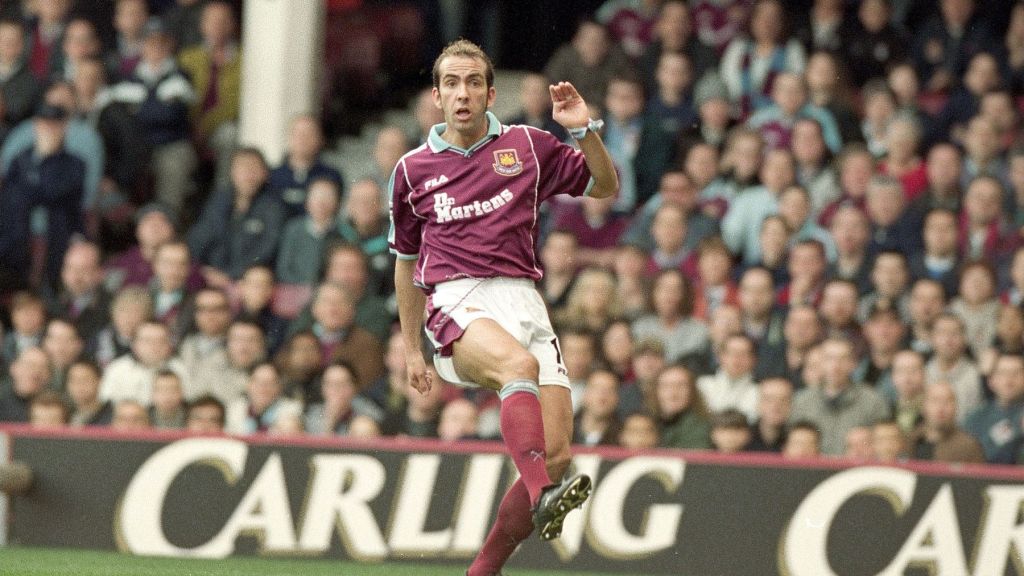
    Di Canio mid-strike as he scores a marvellous scissor kick goal that helped West Ham beat Wimbledon 2-1 in 2000

    Mark Noble

    2x Hammer of the Year (2011-2012/2013-2014), 2x Championship Play-Off Winner (2005, 2012), Hammer of the Decade (2010-2019)

    Affectionately called “Mr West Ham”, the East London local made 550 appearances from 2004-2022, captaining the team from 2015-2022. Noble just gets it. He knows what it means to play for West Ham, living through relegation, promotion, and European football. He understands the intricacies and importance of the West Ham crest.

    A rugged, no-nonsense centre midfielder, Noble was a stoic head and reliable playmaker. Relentlessly committed in defence, Noble dug in hard to win the ball back, finishing his career with a tackle success percentage of 70%. Nobody was safe from Noble, regardless of reputation, as in 2005, Tottenham’s (then) latest signing Edgar Davids was flattened onto his backside by the teenage Noble. His defensive intensity and hardened willingness to commit to contact exemplified his body-on-the-line leadership and East London spirit which sparked vital team energy.

    Offensively, Noble scored some thumping goals from within the box and from range, striking the ball like it owed him money. His goal in the 3-1 win against Bolton Wanderers in 2006/07 indicated his power, crunching Carlos Tevez’s cross with a thundering right-footed volley.

    But Noble’s most direct means of scoring where through penalties. With 40 of his 62 West Ham goals coming from the spot, Noble finished his career with a conversion rate over 90%. Watching his technique, its easy to see why. No stutter-step, no mischievous trickery. Noble just put the ball into the net.

    Noble loves West Ham. He understands the club like no other. Appearing over 500 times for your boyhood club will do that. Despite retirement, Noble is still an immense part of West Ham’s culture. As Sporting Director, he is greatly involved in developing the next generation of West Ham players. He was, and still is, Mr West Ham.

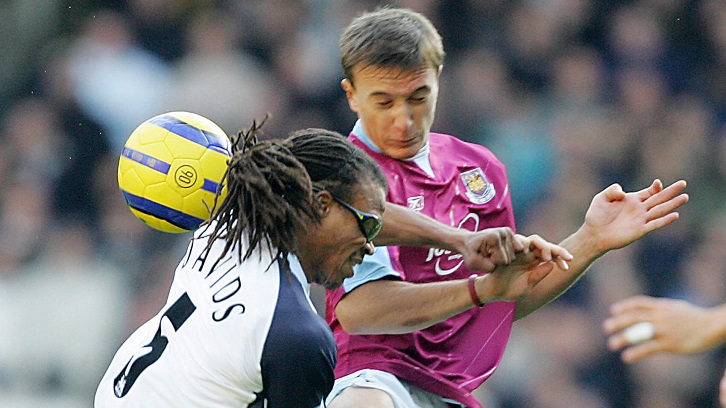
    West Ham’s Mark Noble fiercely contesting the ball with Tottenham’s Edgar Davids in a 1-1 draw in 2005

    Declan Rice

    1x Conference League Winner (Captain), 1x UEFA Conference League Player of the Season, 1x UEFA Conference League Team of the Season, 3x Hammer of the Year (2019-2020,2020-2021,2022-2023)

    The West Ham Academy graduate. Debuting at 18, Rice quickly established himself as a key defensive pillar, climaxing with his criticality in West Ham’s recent European success.

    Rice’s defensive reliability and passing potency was apparent at a young age. In 2019/2020, he ranked in the top 5 Premier League players for both tackles made (116) and interceptions (77), playing every minute of the season and being rewarded his first Hammer of the Year honour.

    Rice’s leadership is inherent. He made his 50th appearance for the club at only 19, and captained the club for the first time at 20, doing so intermittently until Mark Noble’s retirement transitioned full-time leadership to Rice in 2022.

    Rice will most obviously be remembered for his captaining of West Ham to the Europa Conference League title. He finished the tournament with a 92.6% passing completion rate, a vital statistic that helped West Ham score their 29 goals. Rice’s most memorable moment of this campaign is his solo goal against Belgian side, Gent, intercepting and running the length of the ground to finish coldly on his left boot; guiding the Hammers to the semi-final from a 4-1 win. His performances ensured he was crowned the 2023 Conference League Player of the Tournament.

    Although currently at Arsenal, Rice will forever be a Hammer who poured his soul into the badge and guided West Ham to European triumph.

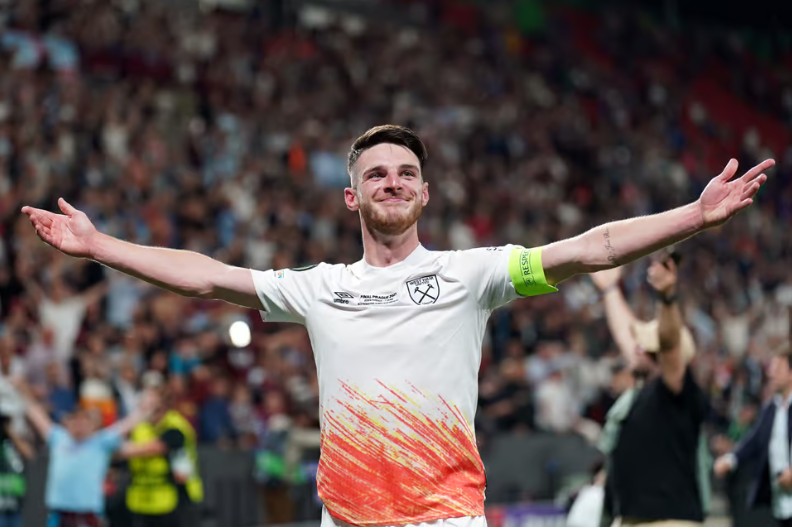
    Rice celebrating with the West Ham faithful after West Ham defeated Fiorentina 2-1 in the 2023 Conference League Final

    Jarrod Bowen

    1x Europa Conference League Winner, 1x Europa Conference League Team of the Season 2022/2023, 1x Hammer of the Year (2023/2024)

    “Bowen’s on Fire”. The chant that echoed through the streets of Prague after West Ham’s 2023 Conference League victory was secured by Bowen’s 90′ minute winner from Paqueta’s through ball- solidifying his West Ham immortality.

    Bowen made me fall in love with West Ham, particularly with his dogged ability to carry his team on his back. He rolls his sleeves up, puts his body on the line, doing everything he can for team success, most recently as club captain.

    A dangerous right winger with the ability to play centre forward, Bowen’s dexterity with both feet ensures that he always threatens from even the tightest of angles. Look up his goal against Arsenal (2021/2022), as he streamed down the right side, striking through the keeper held tight to the right post.

    Bowen is criminally underrated, and I truly believe he is within the top 10 players in the league. He is the complete footballer. Despite his smaller stature, his aerial prowess is proven- look at his hattrick completing goal against Brentford (2023/2024). His deftness by foot is seen in his goal against Brighton (2023/2024), deftly cushioning Benrahma’s cross with his left and finishing with his right. His sharpness around goal is most evident with his diving goal against Liverpool (2023/2024), or his 44′ winner against Arsenal (2024/2025), bursting past former West Ham captain Declan Rice to clinch a sensational diving header from a cross which ultimately cost Arsenal their shot at the Premier League title for the second year in a row. But my favourite goal of his is his belting goal at Bournemouth (2023/2024), curling it into the top corner from outside the box. Give Bowen an inch of space, and he’ll punish it.

    Astonishingly, of his 56 goals scored for West Ham, only 2 of those were penalties, showcasing his adeptness at scoring from open play.

    In a disastrous premiership season, Bowen’s offensive potency provided a glimmering light for West Ham supporters. Bowen ranked 9th in the Premier League for goals and assists in 2024/2025 (at 21 g+a), and was directly involved in 44% of West Ham’s goals (19/43). Bowen’s performances really showed West Ham supporters how lucky we are to have him, and it isn’t hyperbole to say that, without Bowen, West Ham were serious relegation candidates.

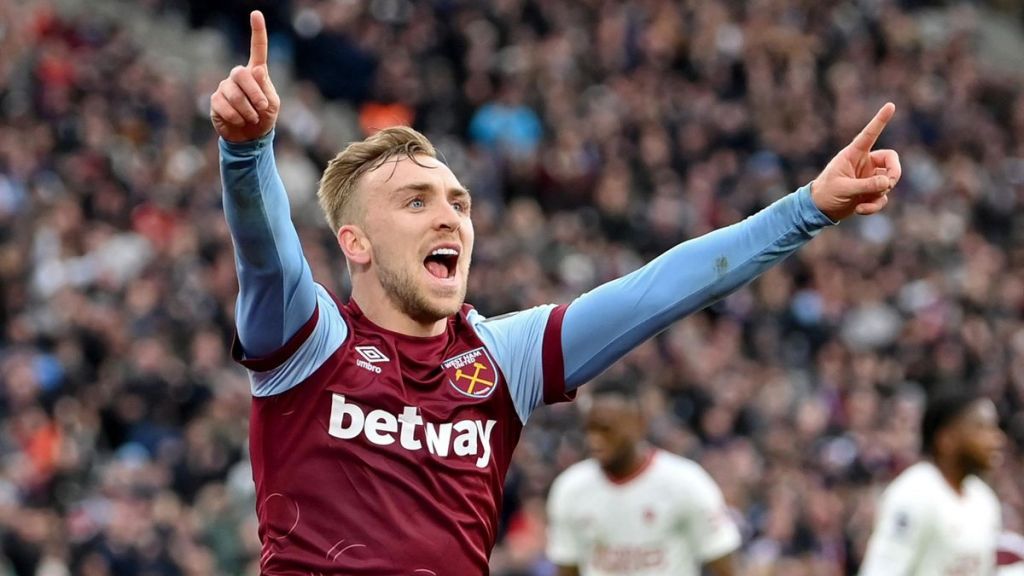
    Bowen celebrating his goal against Manchester United, which West Ham went on to win 2-0, in 2023

    These players epitomise what it means to be a Hammer. They dedicate themselves to the badge. No matter how many times the team gets knocked down, these players pick themselves up, fighting with spirited grit and determination.

  • The Art of the Tag

    The Art of the Tag

    Janus’ Journal #2 – By Hugh Wilkins

    Tagging, Man-Marking. A deliberate sporting tactic that aims to completely neutralise an opposition’s best player, and their impact with the ball. When a player gets free reign within a game, the tagger ensures that players who can break open a game, need to become conscious, aware, assured in their decision-making. All of a sudden, what once was an arena for them to play purely and freely, is replaced with a dogged, determined and dedicated player breathing down your neck, whose sole purpose, is to negate you. Never mind the ball, the tagger’s mission first and foremost, is to stop their target through any means necessary. They are hitmen, silent and unsung assassins, and as a sports consumer, I love them.

    It makes logistical and tactical sense. By eliminating an opposition’s best player, coaches attempt to stem their ability to influence and oftentimes win the game. In AFL tagging has made a bit of a resurgence, particularly in the middle of the ground, where offensive movements are often decided.

    The nightmares of star players, this article will discuss and celebrate the work of some of the toughest, hardest and fittest players whose credit and ability often goes unrecognised. Here’s to the taggers…

    Cameron Ling:

    Geelong 2011 Premiership Captain, the auburn assassin, the mayor of Geelong, Cameron Ling was the nightmare of many star midfielders in the mid 2000s. One of the best in the tagging role, Ling was adept at quelling the impact of the opposition’s best midfielder, without sacrificing himself. Ling was incredibly capable of winning his own football, and becoming offensively involved in team-first, corridor movement which greatly characterised the 2007-2011 Geelong side.

    When I think of Ling, my first thought always goes to his role on Nathan Buckley, as Collingwood played Geelong in Round 15 2002. Ling had been an interminable pest to Buckley (who later won the 2002 Norm Smith Medal in a losing Grand Final), checking him closely, and greatly restricting his effectiveness. Buckley, receiving a cut above his eyebrow, was told to leave the field under the blood rule, and in an act of frustrated desperation, rubbed his bleeding eye on Ling’s guernsey to apply the blood rule to his assassin. Geelong, leading all afternoon — in part due to Ling’s restrictions on Buckley, ensured Geelong ran away 28 point winners at the MCG, giving Ling the nickname “Ling the Cling”.

    In the 2011 Grand Final, also against Collingwood, Ling was tasked with quelling 2011 Brownlow Medallist, Dane Swan. Swan, who had been averaging 32 disposals in 2011, was greatly inhibited, to only 20 disposals and 6 clearances. Moreover, Ling was able to amass 20 of his own disposals, which was capitalised by, as Stephen Quartermain put it; “a sweet goal to Cameron Ling” as he snapped around his body to seal the game with the last goal of the 2011 Grand Final.

    A dogged competitor, players like Buckley and Swan have attributed Cameron Ling as one of the hardest opponents they have played on. An ever-present pest, whose toughness over the ball, tenacity within the contest and capacity to run his targets ragged, ensured he is remembered as one of the best taggers of the modern era.

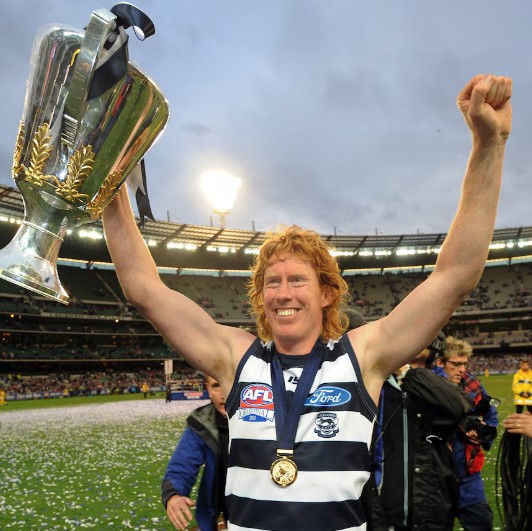
    Cameron Ling proudly wielding the Premiership Cup after Geelong defeated Collingwood in the 2011 AFL Grand Final

    Kane Cornes:

    No discussion about tagging in the AFL would be complete without Kane Cornes.

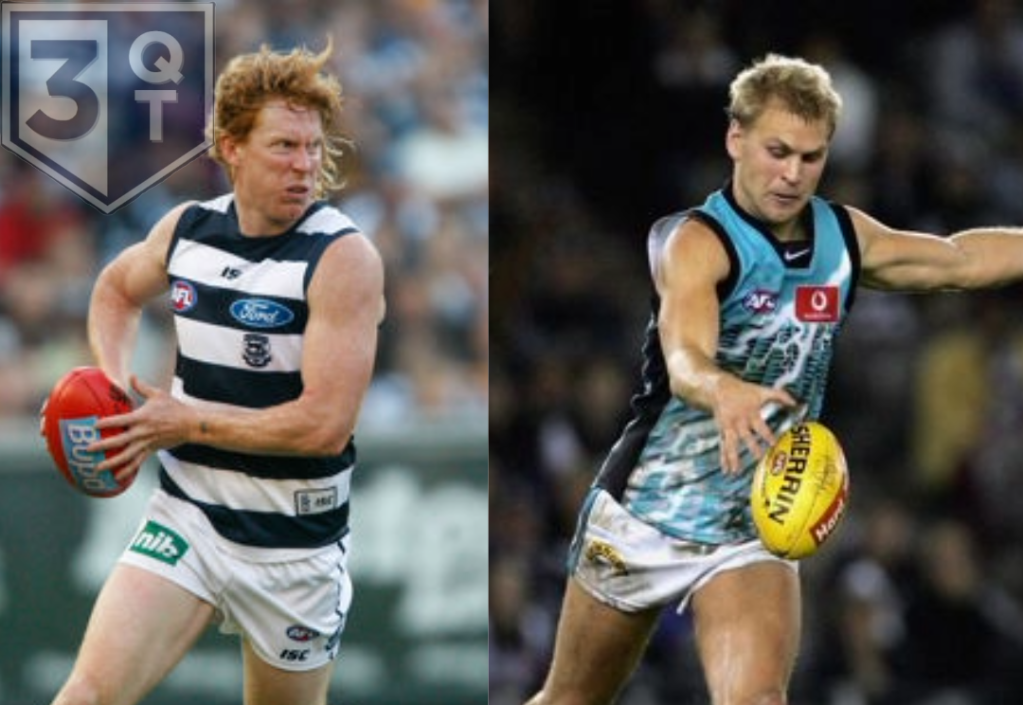
    Before the topical, controversial and unwavering media personality, Kane Cornes was a hard-running, accountable midfielder for Port Adelaide. A four times John Cahill Winner, two-times All-Australian, a premiership and 300 game player for Port Adelaide, Cornes’ career was one defined by his doggedness and endurance, which were key attributes highlighting his skilfulness as a tagger.

    Cornes, an elite runner; had incredible endurance and a versatile ability to slot into wherever the team needed him. However, like Ling, Cornes’ effectiveness as a tagger also came from his ability to win his own footy, and contribute to Port both as a defensive outlet, or an offensive contributor. Always dedicated to the cause, Cornes had many duels with some of the competitions best midfielders like Gary Ablett Jr, Sam Mitchell and Daniel Kerr.

    But Cornes’ best tagging role undoubtedly came in the most important game in Port’s history. The 2004 Grand Final. Cornes was sent to Simon Black, the 2002 Brownlow Medallist and 2003 Norm Smith Medallist. Black’s impact on that Brisbane team was palpable, winning the 2003 Norm Smith with a monstrous 39 disposals. Enter, Kane Cornes. The brash and brazen 21-year-old was given Black as his assignment on the biggest stage; and he succeeded. Black, who had been so damaging the Grand Final previous, was suffocated to just 15 disposals by Cornes’ incessant presence. The asphyxiation of Simon Black thus allowed Port to run away 40 point winners and end Brisbane’s dominant dynasty.

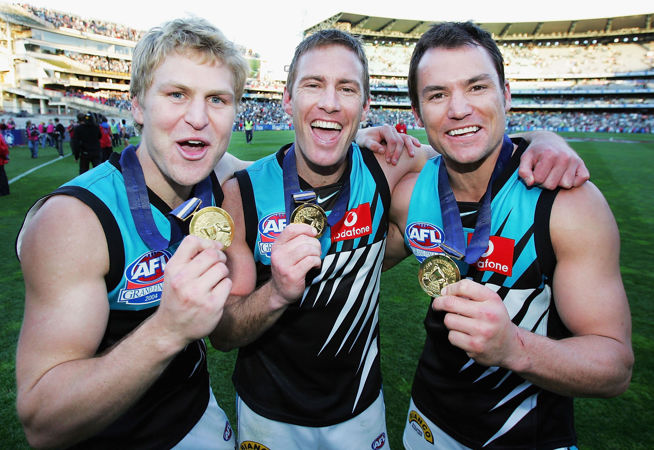
    Kane Cornes, Jarrad Schofield and Brett Montgomery flaunting their 2004 Premiership Medals (Photo by GSP Images, 2004)

    Tagging and its return in modern-day AFL:

    In AFL nowadays, there has been a noticeable resurgence to the prominence of the tag. In a game that has been increasingly decided by the work of the midfielders, coaches are now far more likely to account for those All-Australian quality players that can hurt them late.

    The game has changed, and players need to be adaptable. When certain players are getting off the chain early, coaches need to be able to pull a switch on the fly, and ensure they can have someone responsible for these players — especially if there is no designated tagger on the team. Players like Alex Neal-Bullen (ADL), Jarrod Berry (BRI), Josh Dunkley (BRI), Conor Nash (HAW) and Mark O’Connor (GEEL) have been vital instruments to nullify the impact of some of the league’s most dangerous players.

    I interpret the tagging role different to most. To me, they are hitmen, assassins, mercenaries. Their entire job is to break the spirit of their direct opponent, a return to one on one football in the time of zone/team systems. Imagine them as the seeker in Harry Potter. Their entire role concerns a completely different task from the rest of the team, but they can be immensely vital in victory. Whilst critics will often use statistics to identify whether a player has been well stopped; statistics don’t convey the success of the tag, as they cannot quantify the restriction of these players influence. Any player can get junk possessions, but it is their effectiveness that is inhibited.

    There is nothing better than a team with a designated tagger. Hawthorn have recently relied on Finn Maginness to nullify the danger of Nick Daicos. His 2023 suffocation on Nick Daicos ensured the then Brownlow favourite was starved, restricted to only 5 disposals and 1 clearance. The tag was so successful that Daicos rested forward to shrug Maginness, which ultimately resulted in his early substitution after a collision with James Blanck. Maginness’ assassination of Daicos was pivotal coaching that helped the 16th placed Hawthorn run away 32 point winners against the Ladder Leaders — and probably was the reason Daicos did not win the Brownlow Medal in 2023.

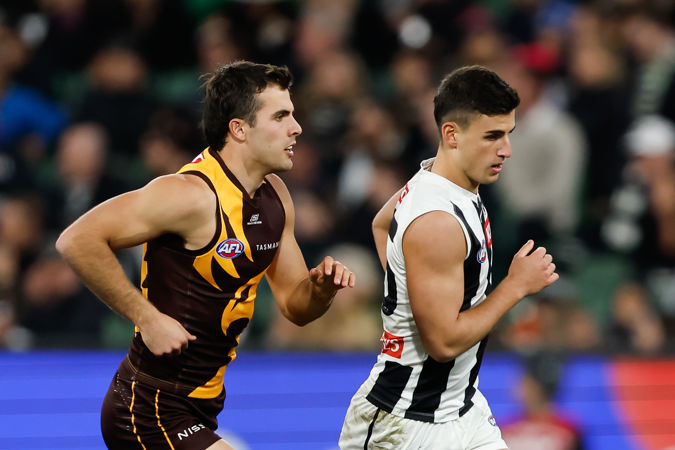
    Finn Maginness stalking Nick Daicos as Hawthorn hosted Collingwood at the MCG, Round 21 2023 (Photo by Dylan Burns/AFL Photos)

    The arrival of Nick Daicos has almost necessitated the return of the tag in the modern game. Already a Rising Star, Premiership Player, two-time All-Australian and Collingwood Best and Fairest in only his fourth year, he is a pure talent that defines the chemical makeup of Craig Mcrae’s Collingwood.

    The Daicos effect has now ensured some coaches really value the use of a tagger each week, not just for certain opponents. Geelong coach Chris Scott has largely given his Irish athlete Oisin Mullin some big shut down roles on players like Nick Daicos, Zak Butters and Jason Horne-Francis; all of which have been integral in some big wins. St Kilda’s Marcus Windhager is Ross Lyon’s resident ball-winning negator, with some immense scalps on Kysiah Pickett and Max Holmes being further complimented with high disposals and an ability to hit the scoreboard. GWS’ Toby Bedford is Adam Kingsley’s tagging talisman, beginning his defensive accountability with a shutdown role on Zak Butters Round 14 2024. Bedford found his niche with this role, with his most notable shutdowns of players like Lachie Neale (2024) and Nick Daicos in Opening Round 2025 being particularly effective.

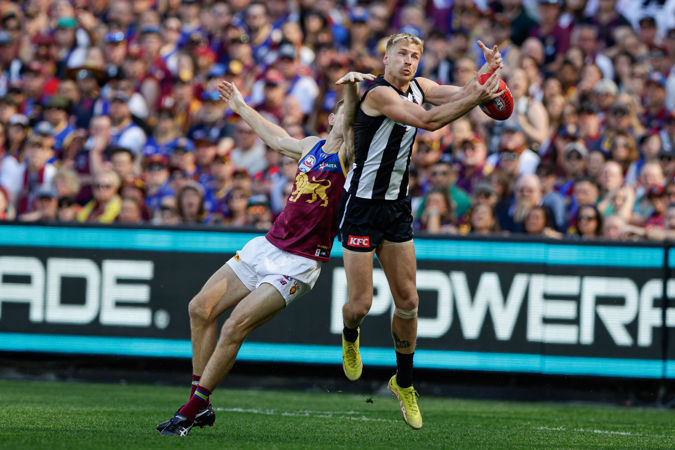
    But, there is one tagging performance of recent memory that I believe was a critically deciding factor in the last day of September. Collingwood do not win the 2023 Grand Final against Brisbane without Billy Frampton’s work in negating Harris Andrews. Whilst Frampton’s statistical output (2 disposals) is often compared against Andrews’ relatively impactful game (16 disposals and 9 marks), Frampton’s influence is seen in his presence. Frampton’s role was purely negation, and in keeping Andrews defensively honest to limit his defensive impact. Frampton’s role as a decoy to occupy Andrew’s attention was vital in allowing Collingwood to score through other means, with Norm Smith Medallist Bobby Hill kicking 4 goals, as Brisbane’s best intercept defender remained occupied by the interminable Frampton. Frampton is a player that thrives with a sole directive. When given a direct responsibility, a direct opponent, he excels, and his Grand Final performance is perfectly indicative of this trait, greatly influencing the 2023 Grand Final, and etching himself into Collingwood folklore, forever.

    Billy Frampton forcing Harris Andrews’ to be defensively accountable during the 2023 AFL Grand Final between Collingwood and Brisbane (Photo by Russell Freeman/AFL Photos)

    ThreeQuarterTime is built on the celebration of the Unsung Heroes, to applaud the tactics and strategies that may not necessarily be the sexiest. But, there is something poetic, something pure, about one on one matchups in team sport. About watching two players tussle in physical bouts, where only the strongest, fastest and fittest can survive and thrive. Taggers can prove that the best star players, can bleed — and if it can bleed, teams can kill it.

  • In praise of Geelong’s Irish Experiment

    In praise of Geelong’s Irish Experiment

    Janus Journal #1 – By Hugh Wilkins

    The Irish experiment. For some fans, the thought of the Irish players breeds excitement. For others, the Irish players are a source of frustration. But for me, the Irish players come to represent more than just the game.

    I feel a kindred spirit with the AFL’s Celtic warriors. A connection. I am not Irish myself, but I identify with these players because I can identify and relate to their experiences greater than the typical draftee. You must understand, my love for AFL has only blossomed in the last six years. Despite my constant exposure to AFL (for my Dad was a coach), I only truly began to appreciate it from a perspective of consciousness. Thus, my identification with the Irish imports can be understood. Like them, I am also learning the game; learning the nuances and intricacies, but also learning to love it from a conscious perspective.

    Luckily for me, Geelong, my team, has a strong history of engaging in this Irish experiment, starting particularly towards the end of the 2016 season, when Zach Tuohy requested a trade from Carlton to Geelong. Along with this, Geelong selected Mark O’Connor from Kerry GAA as a Category B Rookie in October 2016. Both Tuohy (Round 1: Fremantle) and O’Connor (Round 7: Essendon) made their club debuts in 2017, and have become immortalised as stalwart defenders and, most notably, Geelong Premiership Players (2022). Subsequently, Geelong have continued delving into the Irish pool with their selection of Oisin Mullin as a Category B Rookie from County Mayo (Initially in 2021, before eventually coming to Geelong in 2023). This trend has continued even today- as the Cats have filled the Irish void left by Tuohy’s retirement with the Category B Recruitment of youngster Cillian Burke.

    That’s the thing with the Irish. AFL clubs will continue to look down this avenue due to its historical successes, and the capacity to bring through already hardened, tough, resilient and athletic players who have shown a capacity to quickly adapt to the similar, but different, rigours of AFL Football.

    So, forgive the long article, but please indulge me as I wax lyrical about Geelong’s Irish players, and how they have had an impact on me as a Geelong supporter.

    Zach Tuohy

    1x Premiership Player (2022)

    1x All-Australian (2015)

    The frolicking Irishman, with a booming right peg and a penchant for a barrel. Initially drafted by Carlton in 2010 (pick 73 in the Rookie Draft) from his native Portlaoise- Tuohy gradually developed into a consistent, reliable and memorable player. Like most Irishmen, he learnt the trade as a tagger, before slowly drifting into his half-back role with a tendency to roll forward and use his thumping kick to bomb goals from 50; Tuohy’s first goal for Geelong against Fremantle comes to mind (2017).

    For me, I took notice of Tuohy in his time at Geelong. His windswept hair and voluminous moustache made him an instant cult figure. A real heart and soul player that fought for the jumper, the Cats stood taller with Tuohy in the half-back line. A mobile half-back with drive and desire to push up the ground. His mobility correlated with his tackling ability and his wiliness around goal. His Gaelic attributes enabled his craftiness around goal. Look up his two goals within 2 minutes against Brisbane in 2021; a one point win for the Cats. The first showcased Tuohy’s Gaelic capacity to step through traffic, weaving through both Charlie Cameron and Hugh McCluggage for an impressive leaning goal. The second was indicative of Tuohy’s hard running capacity and ability to stay dangerous within the same contest- feeding a handball to Shaun Higgins on the boundary line and getting it back with a no looker for a cheeky checkside goal.

    What struck me about Tuohy was his embracing of physicality. Playing against Western Bulldogs at Marvel Stadium in 2022, Tuohy told Bailey Smith where he could shove it amidst a Three Quarter Time fracas from some Bulldogs players against Rhys Stanley. Tuohy, first to the scene, defended the ruckman, resulting in an iconic, fierce and fiery altercation with Bailey Smith as he ended up headbutting Tuohy.

    But that’s what you got with Tuohy. A fire that burnt as bright as his hair. A fire that could not be snuffed out. One of the most passionate players I have ever seen.

    His reliability and consistency could be seen in his eventual surpassing of the great Jim Stynes record for most games played by an Irish player.

    Tuohy has many iconic moments in the annals of Geelong’s history (His classic Irish jig whenever he kicked a goal or his 250th Game being the Grand Final against Sydney in 2022). But his most notable moment has to be his goal after the siren against Melbourne in 2018. Going into the last term, Geelong where down by 23 points, were a last ditch effort to win the game with a minute to go came from a bold kick in board from Daniel Menzel to Tom Hawkins (who kicked four in the last quarter), to get it to Mitch Duncan, with a foray kick forward to find a now forward Tuohy who takes an aerially powerful contested mark and converted after the siren to win by two points.

    Mark O’Connor:

    1x Premiership Player (2022)

    When compared to Tuohy, Mark O’Connor is a player that receives little to no fanfare. Instead, he has quietly and deliberately found his way into fairly consistent stints in the side. Debuting in 2017, and with 130+ games for the Cats; O’Connor has developed into a reliable and stalwart defender for the Cats.

    Like is apparent to most Irish players, O’Connor’s greatest attribute is his resolute physicality. Always temperate on the field- O’Connor is able to stoically complete his designated assignment. His defensive determination often goes unnoticed- but are often critical to the team’s success. His defensive physicality has become apparent in his willingness to staunchly tag (particularly memorable are his duels with Lachie Neale- Round 6, 2024, O’Connor was able to quell Neale’s influence and was even able to work hard in getting a goal himself), commit to contests as well as his ability to use his strength to help set up goals or get on the end of some team movement; which is exactly how he finds himself as a stalwart member of Geelong’s defensive setup. Look at O’Connor’s goals too. His Irish-ness allows for the capacity to flush them on the run, or craftily snap around his body (O’Connor’s goal against Melbourne or the Bulldogs in 2020 come to mind).

    A reserved and commanding member of Geelong’s backline, he plays with a stoic seriousness that reflects his intensity and physicality. That’s what strikes me about O’Connor. His quite-ness is indicative of his assuredness.

    In 2022, along with Zach Tuohy, O’Connor became a Premiership Player , with Tuohy and O’Connor becoming the second and third Irish players to play in a Premiership since Tadgh Kennelly (2005). In a game where not much was to be done defensively- O’Connor finished the game with 13 disposals at 92% efficiency; and most notably, getting a holding the ball tackle on James Rowbottom on the stroke of 50 to deny Sydney from adding another to their only solitary first quarter goal.

    Oisin Mullin

    The third player in this article is Oisin Mullin, a player that i will always staunchly defend. No matter how poor a game he plays, or how much certain fans think he is to blame for certain results, I will resolutely support and defend Mullin, for there he is an incredibly capable, dynamic and intelligent athlete who is still developing his understanding of the game, and is having to do so on the fly. As a new player still learning the game, he can become a whipping boy for Geelong fans, but there is something inspirational about seeing a player- far from his home, his family, learning a new game that is similar but deeply nuanced and confusing compared to the Gaelic Football he grew up with. How can you not be inspired by this?

    I think we are seeing an immense and positive step in the development of Oisin Mullin. To the outside eye, Oisin Mullin is an easy target for criticism, but I can see the potential that is gradually becoming more and more apparent. Mullin’s best feats have occurred as a tagger. In the Round 9 game against Port Adelaide at GMHBA Stadium, Port jumped the Cats to go into Quarter time with a 5 goal lead; spearheaded by the midfield destruction led by Horne-Francis (8 disposals, 4 score involvements, 1 goal, 3 clearances). Chris Scott dragged Ruckman Rhys Stanley and immediately inject Mullin onto the dangerous Horne-Francis. Despite the loss, Mullin was able quell the impact of Horne-Francis, nullifying him to only 2 score involvements and 4 clearances for the rest of the game; and this was the match where I became invested in the Oisin Mullin development. This match-up was also critical to Geelong’s thumping Qualifying Final against Port Adelaide. Away from home and with a late withdrawal from Tom Stewart- Mullin was brought into the side to again, sit on Horne-Francis and negate his influence.

    In Round 3, 2025, Mullin was placed on the dangerous Charlie Cameron; and after conceding a first quarter goal- locked in and was able to keep Cameron to only 7 disposals, and 2 score involvements, whilst Mullin himself had 15 disposals and 100% efficiency in a wet and slippery environment that probably suited his Gaelic attributes.

    In Round 7 2025 Mullin was tasked with Nick Daicos, a match up I watched quite intently whilst at the game. In the last quarter, with Geelong’s lead at a slender 7 points, Mullin persisted with the tag; and was able to effectively negate Daicos to only 3 disposals. Although Geelong was well within their rights to lose that game from a commanding position (Crisp missed after the siren), Mullin’s disablement of Daicos instrumentally denied his ability to find influence in the game in clutch moments where he historically breaks the game open as a game-winner.

    That is not to disregard his adapting development in the skills department. His most iconic moment surely must be his beautiful left foot hit up running on the Members wing to Brad Close who set up Ollie Henry for his third goal. Unfortunately, the game proved to be a heart-breaking Prelim defeat as the Cats were felled by the Lions by 10 points.

    Mullin is obviously highly rated internally by Geelong. He has found himself a consistent spot in the side in 2025, so Chris Scott evidently sees something in the developing Irishmen. Oisin bias aside. I genuinely do think it is only a matter of time before we see Oisin break the shackles of development and becomes a respected Irish footballer in the vein of Zach Tuohy. We have seen what he can do, and i believe he is more than just a flirting experiment. He is most valued and effective as of writing as a tagger- especially on midfield players. Oisin’s current position as a defender often leaves him an easy target for criticism; especially in losses. But, watching Mullin live, i do see an athlete with a resounding composure that just hasn’t found the capacity to release it yet. That’s why I believe no one should be surprised if they find Oisin spending far more time in the midfield. He is a tough and brick-walled with a tank for days for two way running. He has the capacity to attack the ball hard, and use his speed to burst or weave through contests, and with an ability to use his Gaelic attributes and natural speed to dexterously change his running patterns on a dime, but to also find targets with the cheeky, angled kicking synonymous with Geelong.

    At Gather Round this year, during a signing event, I even asked Oisin Mullin how he has found the change between Gaelic football and AFL. He spoke to it being a significant change compared to what he grew up playing. Following on, i asked whether he is enjoying, of which he said yes. He spoke to enjoying the challenge of learning this new game on the fly, in a competition where those who can’t adapt get spit out quite quickly. Thus, he has a fire inside, a competitive spirit and desire for adaption and gradual improvement each week.

    Obviously, this article mentions the Geelong Irishmen. I am a Geelong fan, sue me. But that is not to discount the presence of the Irish players around the league. Mark Keane is a regular defender for the Adelaide Crows, recently heroically saving the Showdown no.57 clash with his courageous back-with-the-flight contested mark with 1 minute to go (and his almost unintelligible post-match interview about “footy”). Conor Nash has become a resolute hard-nosed tackling midfielder for Hawthorn, and Connor McKenna, the former bomber, is a premiership player for Brisbane (2024). All of these players have found their footing in the AFL after times of significant development; of learning the game and its intricacies. This is why I relate to the Irish players, because like them, I am learning the game on the run, and it is a great exemplar of the value that the AFL, and Geelong in particular, have found via the Irish Experiment.

  • Jamarra Ugle-Hagan granted indefinite personal leave by the Western Bulldogs

    Jamarra Ugle-Hagan granted indefinite personal leave by the Western Bulldogs

    Hugh Wilkins

    It has been a turbulent period for the former No. 1 Draft Pick, who is yet to play in 2025. He has trained infrequently and has publicly shirked his duties to the Western Bulldogs, impacting his relations with the football club and his teammates.

    His estrangement with the Bulldogs could be seen publicly, choosing to attend an NBL game during the Western Bulldogs’ 100 Year Anniversary match against Collingwood.

    Resultantly, Ugle-Hagan has compassionately been granted personal leave by the club earlier today.

    In a statement released by Western Bulldogs Executive Manager Sam Power, the decision was mutually decided in consultation with Ugle-Hagan, his family and the Western Bulldogs.

    Power reiterates the Western Bulldogs’ commitment to Ugle-Hagan’s “health and wellbeing”.

    “We will continue to support Jamarra throughout this period” concludes Power.

    Ultimately, this highlights an incredibly messy saga concerning Jamarra Ugle-Hagan, whose future at the Western Bulldogs remains to be seen.